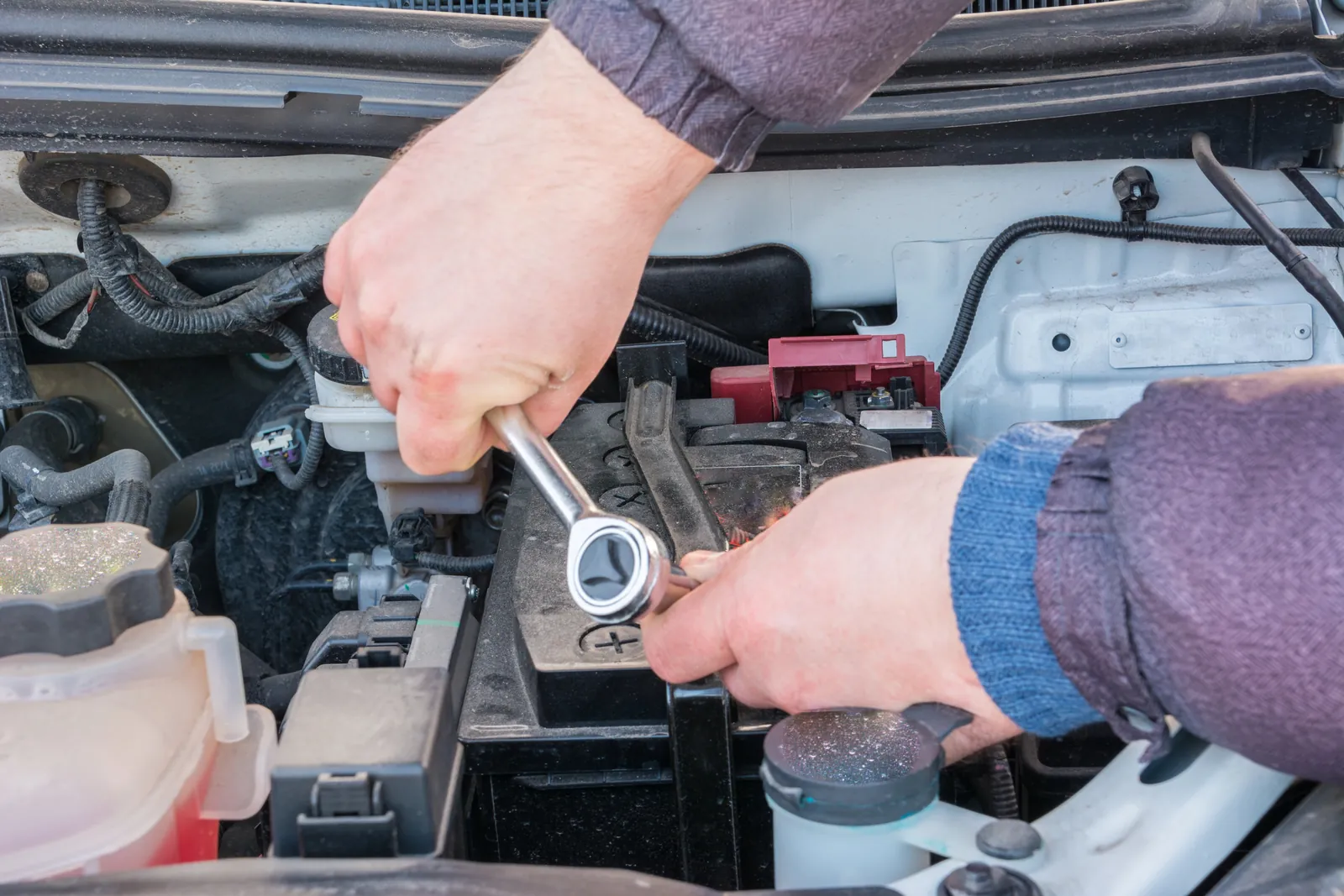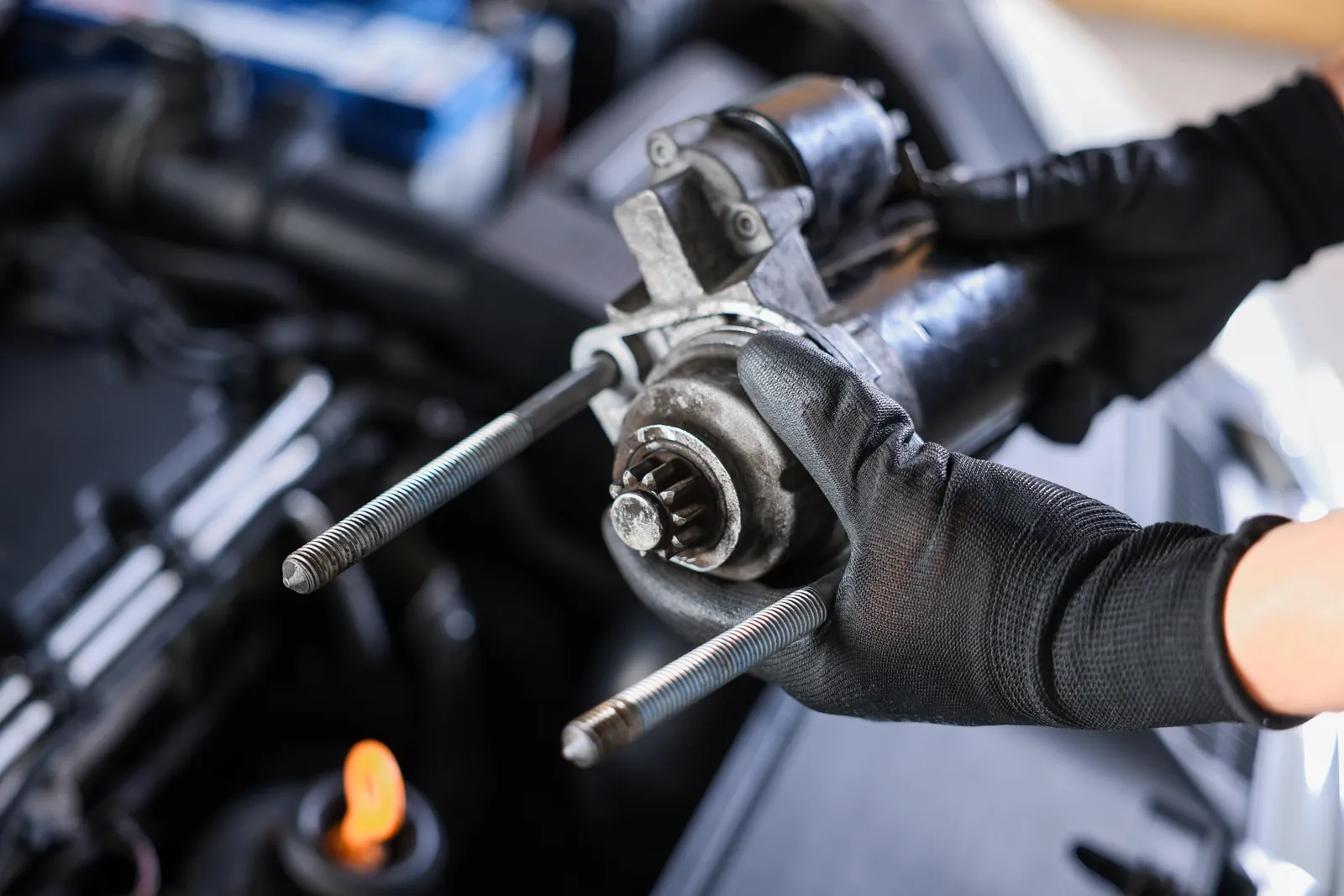
Bad starter symptoms are often mistaken for battery trouble, because both end with an engine that will not turn over. The difference is usually in the details. With a failing starter, the lights tend to stay bright while nothing happens, the problem comes and goes, or there is a mechanical noise where the smooth sound of cranking should be.
Those details tell a mechanic where to begin testing, and none of them is proof on its own.
When the starter does turn out to be the cause, Golden Star Mobile Mechanics handles starter replacement where your vehicle is, after testing to confirm it.
What the Starter Does
The starter is an electric motor with a switch, called a solenoid, mounted on it. When you turn the key or press the button, the solenoid pushes a small gear into mesh with a large ring gear on the engine. In the same movement it closes a heavy contact that sends battery current to the motor. The motor spins the engine until it fires, and the gear pulls back.
Each part of that sequence can wear: the motor, the solenoid contacts, the gear and the mechanism that moves it.
Common Signs of a Failing Starter
One click, then nothing
You turn the key, hear a single click or clunk, and the dash lights stay bright. That usually means the solenoid is moving and the motor is not turning. Worn internal parts are a common reason. A poor connection on the starter cable is another.
Starting that comes and goes
The car starts normally for days, then does nothing, then starts after several tries. Worn starters often behave this way. Some act up mainly when the engine is hot, after a short stop on a summer day, and work again once things cool.
Grinding or whirring
A harsh grinding as the engine tries to crank suggests the starter gear and the ring gear are not meshing cleanly. A high-pitched whir with no cranking suggests the motor is spinning without engaging the engine. Have either one checked soon, because continued grinding can damage the ring gear, which is a larger repair.
Slow or labored cranking
A starter with worn bearings can drag. A weak battery or corroded cables cause slow cranking far more often, so those are tested first.
A starter that keeps running, or smoke
A whine that continues after the engine has started can mean the starter has stayed engaged. Smoke or a burning smell after repeated attempts means something has overheated. In either case, shut the engine off and stop trying to start it.