
Rough idle
The engine stumbles or shakes while the car is stopped, and the tachometer needle may waver.
The spark plugs are coming due, or the engine idles rough and someone has said it needs a tune-up. Those are different situations, and this page covers both.
Golden Star Mobile Mechanics provides car tune-up service in Las Vegas where the car is parked. With a misfire, the engine is tested to confirm the cause before a new part goes in.
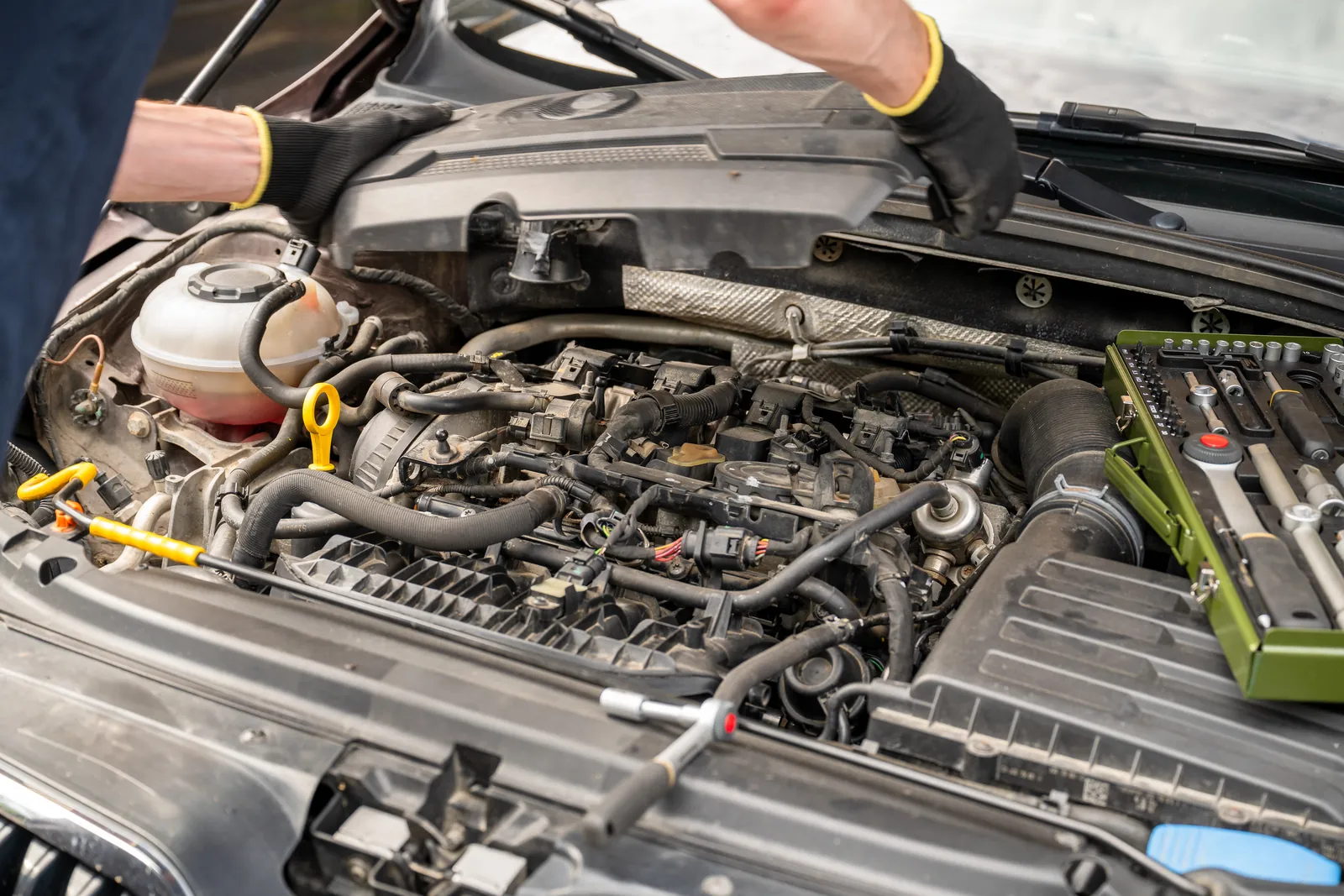
On older cars a tune-up meant setting the ignition timing and the carburetor by hand. A modern engine’s computer makes those adjustments itself, so a car tune-up today means replacing the parts that wear.
Those parts are mostly the spark plugs, with a check of the ignition coils and a new engine air filter when one is due. The vehicle maker’s schedule says when, and the rest of that schedule is covered under car maintenance.
Which of these your car needs depends on its mileage, its schedule and how the engine is running.
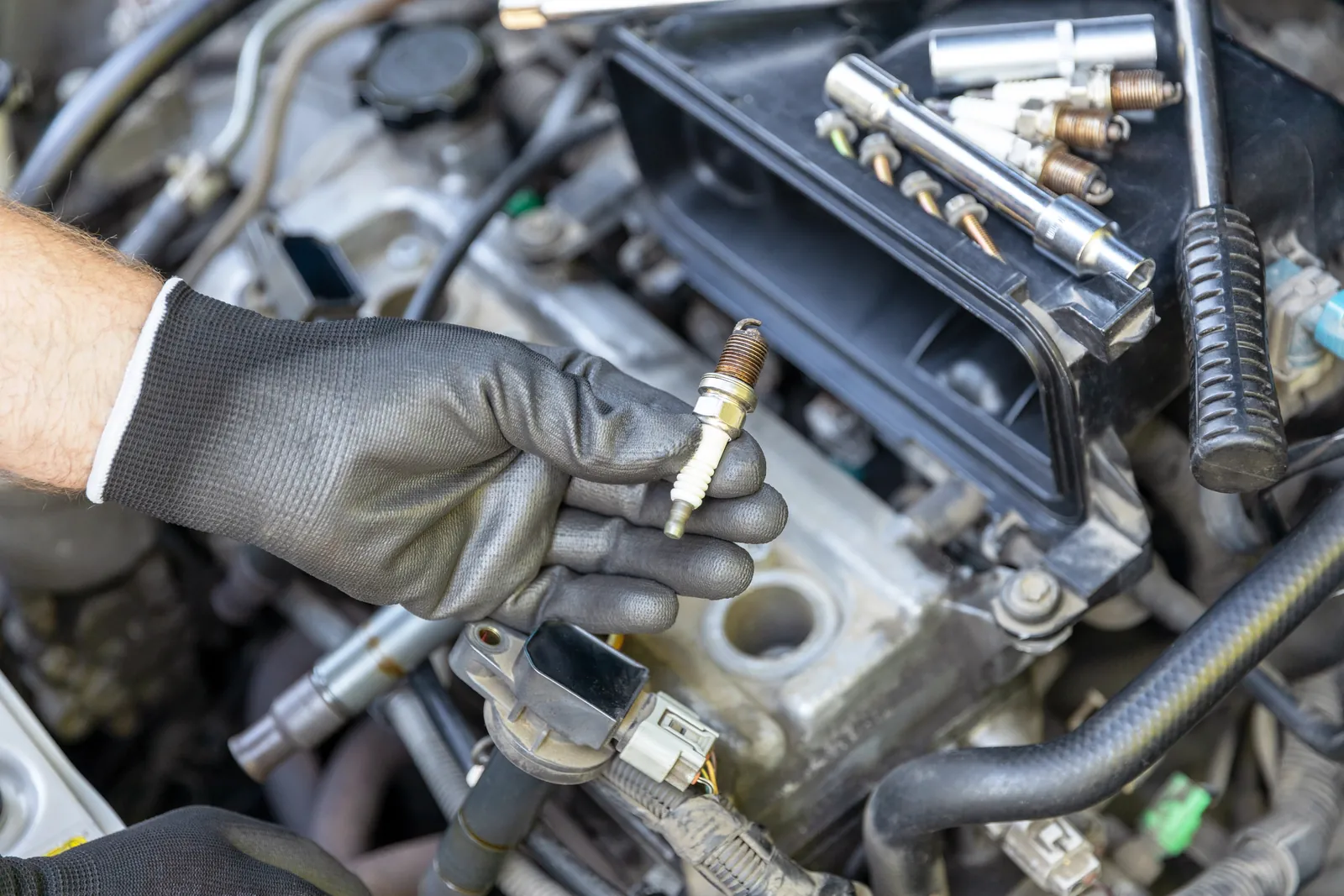
A spark plug fires the fuel and air in its cylinder, and its electrodes wear with each spark until the gap is too wide. Spark plug replacement fits new plugs of the type the vehicle maker specifies, whether copper, platinum or iridium.
A coil turns battery voltage into the high voltage a plug needs. Most newer engines have a coil on each plug with a rubber boot between them, and older designs use plug wires. Ignition coil replacement is for a coil, boot or wire that fails a test or shows cracks or burn marks.
The engine air filter stops dust before it reaches the cylinders. Desert dust loads it early, so engine air filter replacement goes by the condition of the filter and not only by mileage.
A misfire is a cylinder failing to fire. Each sign is a reason to test, not a verdict on a part.
The engine stumbles or shakes while the car is stopped, and the tachometer needle may waver.
A rhythmic shake through the seat or the steering wheel can be a misfire. Engine mounts feel similar, so if shaking is the main complaint, begin with mobile diagnostics.
The car pauses or stumbles when you press the accelerator. Ignition, fuel supply and air metering can each be behind it.
Fuel that does not burn in a misfiring cylinder is wasted. Tire pressure, driving pattern and other faults lower fuel economy too.
A code scan reads stored codes, and a misfire code names the cylinder or reports the misfire as random. It does not say why.
A flashing light signals an active misfire that can overheat the catalytic converter. Ease off, keep driving to a minimum, and see check engine light diagnosis for the detail.

A cylinder needs spark, fuel, air and compression to fire, so a misfire can start in the ignition, the fuel system, the air intake or the engine itself. New spark plugs cure it only when the plugs were the cause.
Engine misfire repair therefore starts with testing. This is how a misfire is usually narrowed down:
Give us the year, make, model and engine size, the mileage, and how the engine is running.
Your request is reviewed, and we contact you to confirm fit and timing for the tune-up.
You get a written estimate for the plugs, coils or filter involved, and the job waits for your approval.
Once approved, the work is done where the car is parked, and the old plugs show how each cylinder has been running.
Many tune-up jobs are completed during the first visit when parts are available, and some need a return visit.
Plug access differs from engine to engine. On many inline engines the plugs sit in a row on top, within reach once the coils are off.
On others, some plugs sit under the intake manifold or behind other components, which come off first and go back with new gaskets. That makes mobile spark plug replacement a larger job.
A plug that has been in place a long time can also seize in its threads or break on the way out. If a plug job cannot safely be completed on site, we will say so, and it may need a shop. The services page covers other engine work.
You get a written estimate before work begins. For a misfire it follows the testing, so it names the part found at fault.
It depends on the engine and the plug type, and the range is wide. Copper plugs wear soonest, while platinum and iridium plugs last much longer. The maintenance schedule in your owner’s manual gives the interval for your engine.
Only if the plugs are the cause. A misfire can also come from a coil, an injector, a vacuum leak or low compression, so the cylinder is tested first.
Not automatically. A coil that tests sound can stay, since coils do not wear on the same schedule as plugs. Where the coils are buried under other parts, replacing both together is sometimes suggested because the access work is the same.
Drive as little as you can. A flashing light means the engine is misfiring now, and the unburned fuel can harm the catalytic converter. Check engine light diagnosis explains a steady light and a flashing one.
For a car tune-up in Las Vegas, send the year, make, model, engine size and mileage. We read each request and contact you to confirm fit and timing.
If the check engine light is flashing or the engine is shaking hard, keep driving to a minimum and call or text.