Battery or alternator is a fair question, because these parts depend on each other and a fault in either one ends the same way: a car that will not start. What separates them is when the trouble appears. A weak battery shows itself when you try to start the car, and the car behaves once the engine is running. A failing alternator shows itself while the engine runs, through a warning light or dimming lights, or as a battery that keeps going flat however new it is.
Those patterns are clues rather than proof. Loose or corroded cables, a slipping belt or a drain while the car is parked can produce the same symptoms, so a test comes before a new part.
If the signs below point toward the charging system, Golden Star Mobile Mechanics tests it where your vehicle is. Alternator replacement is one of the repairs we perform on site.
What Each Part Does
The battery stores energy. Its main job is to send a large burst of current to the starter motor, and to run the lights, locks and computers while the engine is off.
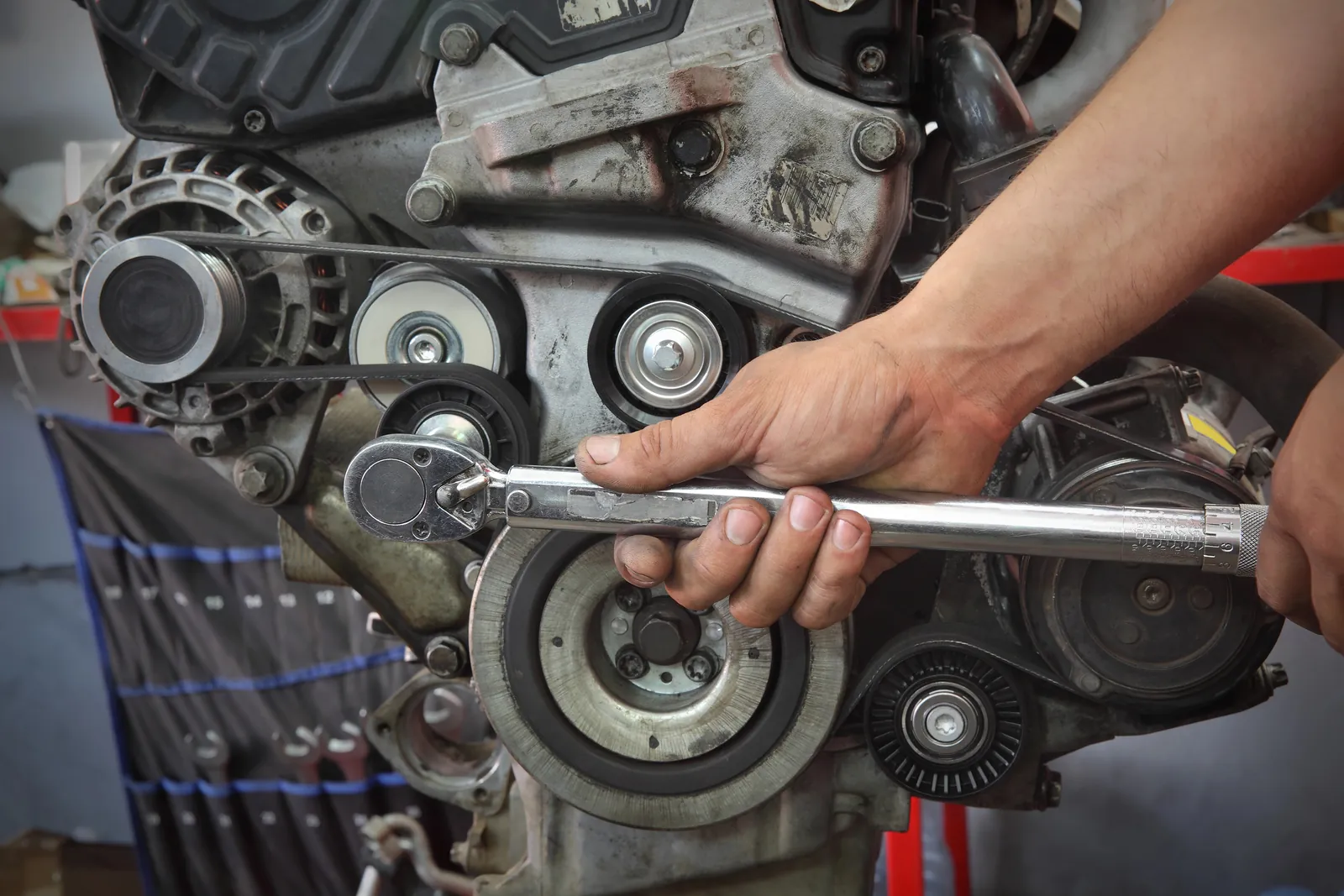
The alternator is a small generator driven by a belt from the engine. Once the engine is running, it supplies the car’s electrical needs and recharges the battery. A regulator, built into the alternator or handled by the engine computer depending on the vehicle, keeps its output in the correct range.
They work as a pair. A battery that cannot store energy makes the alternator work harder than it was meant to, and an alternator that undercharges or overcharges can ruin a good battery. Replacing one without testing the other can bring the same problem back.
Signs That Point Toward the Battery
- The engine cranks slowly or you hear clicking, most often first thing in the morning or after the car has sat for a few days.
- After a jump start the car runs normally and the lights stay steady, then it struggles again the next time it has been parked for a while.
- The battery has been in the car for several years. Desert heat is hard on batteries, so age counts for more in a hot climate.
- The terminals carry a white or green crust, or the battery case looks swollen.
Once the engine is running, a car with a weak battery usually drives and behaves normally.
Signs That Point Toward the Alternator
- A battery-shaped warning light or a charging system message comes on while the engine is running.
- Headlights and dash lights dim, flicker or change brightness with engine speed.
- The car starts with a jump but stalls shortly after the cables come off, or it dies while you are driving.
- A recently replaced battery goes flat again.
- You hear a whine or growl from under the hood, or smell hot rubber or hot wiring.
If the warning light comes on while you drive
With the charging system not working, the car runs on the battery alone. How far it goes varies with the battery and with how much electricity the car is using, and when the battery runs down the engine can stall. Switch off what you do not need and head for a safe place to stop instead of continuing the trip.
On many vehicles the same belt also drives the water pump. If the temperature gauge starts to climb or the steering turns heavy, pull over as soon as it is safe and switch the engine off.
Faults That Imitate Both
Several problems sit between the battery and the alternator and can look like either one:
- Loose, corroded or damaged battery cables, including the ground cable to the body or engine.
- A drive belt that is worn, loose or slipping, so the alternator does not spin as it should.
- A blown fuse or damaged wire in the charging circuit.
- Something that keeps drawing power while the car is parked.
A new battery can hide these for a short while, and then the trouble returns.
How a Mechanic Tells Them Apart
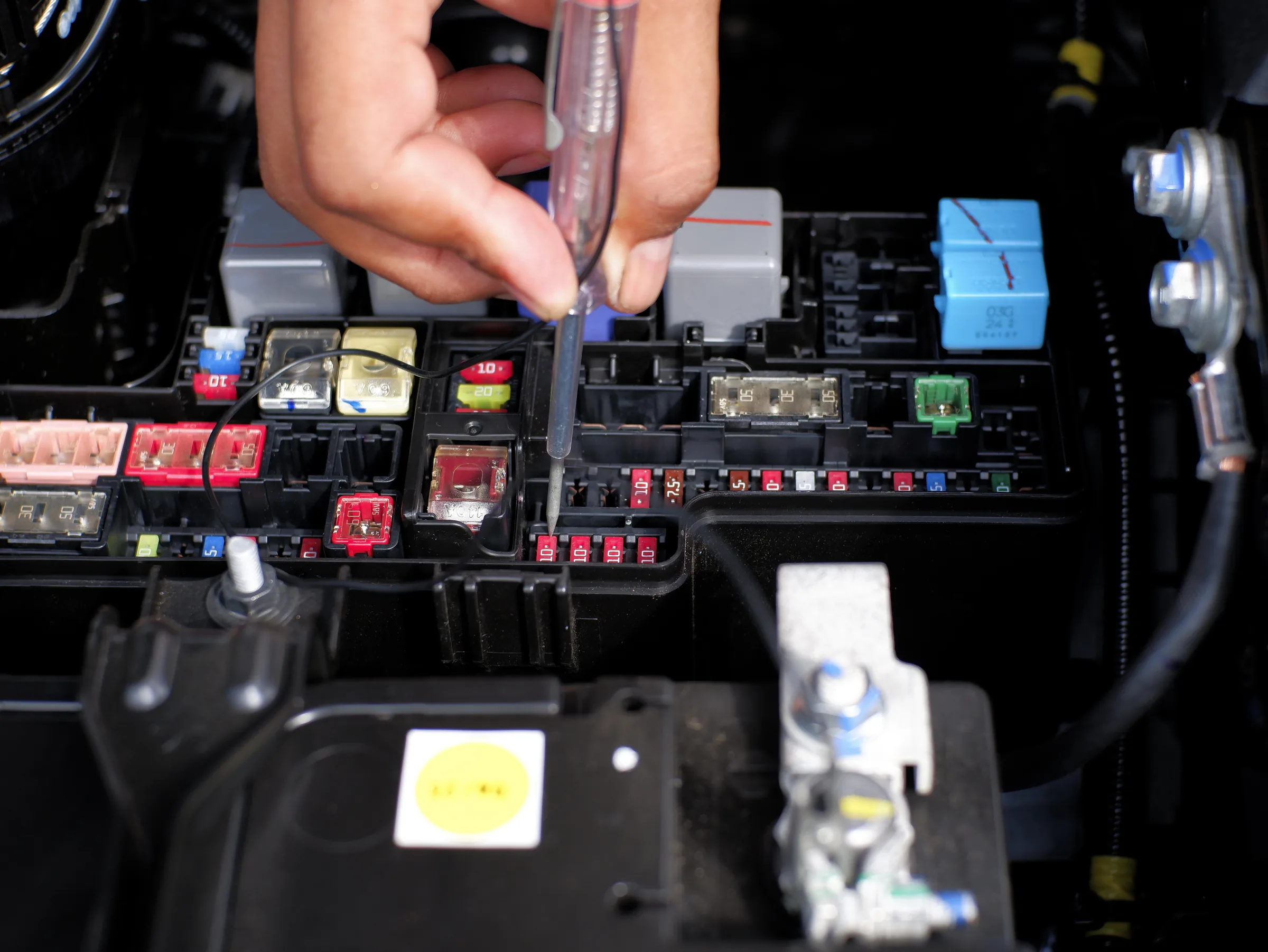
The answer comes from measurements. The battery is tested first, at rest and under load, to see whether it can still store and deliver energy. Then the charging voltage is measured with the engine running and the lights, blower and other loads switched on. The belt, the connections and the cables are checked along the way.
One old test is worth skipping: pulling a battery cable off while the engine runs to see whether it keeps going. On a vehicle with electronic controls that can cause a voltage spike and damage, and it tells you very little.
When the measurements show the alternator has failed, Golden Star can replace the alternator where the car is parked. When they do not settle the question, mobile diagnostics covers the wider electrical checks.