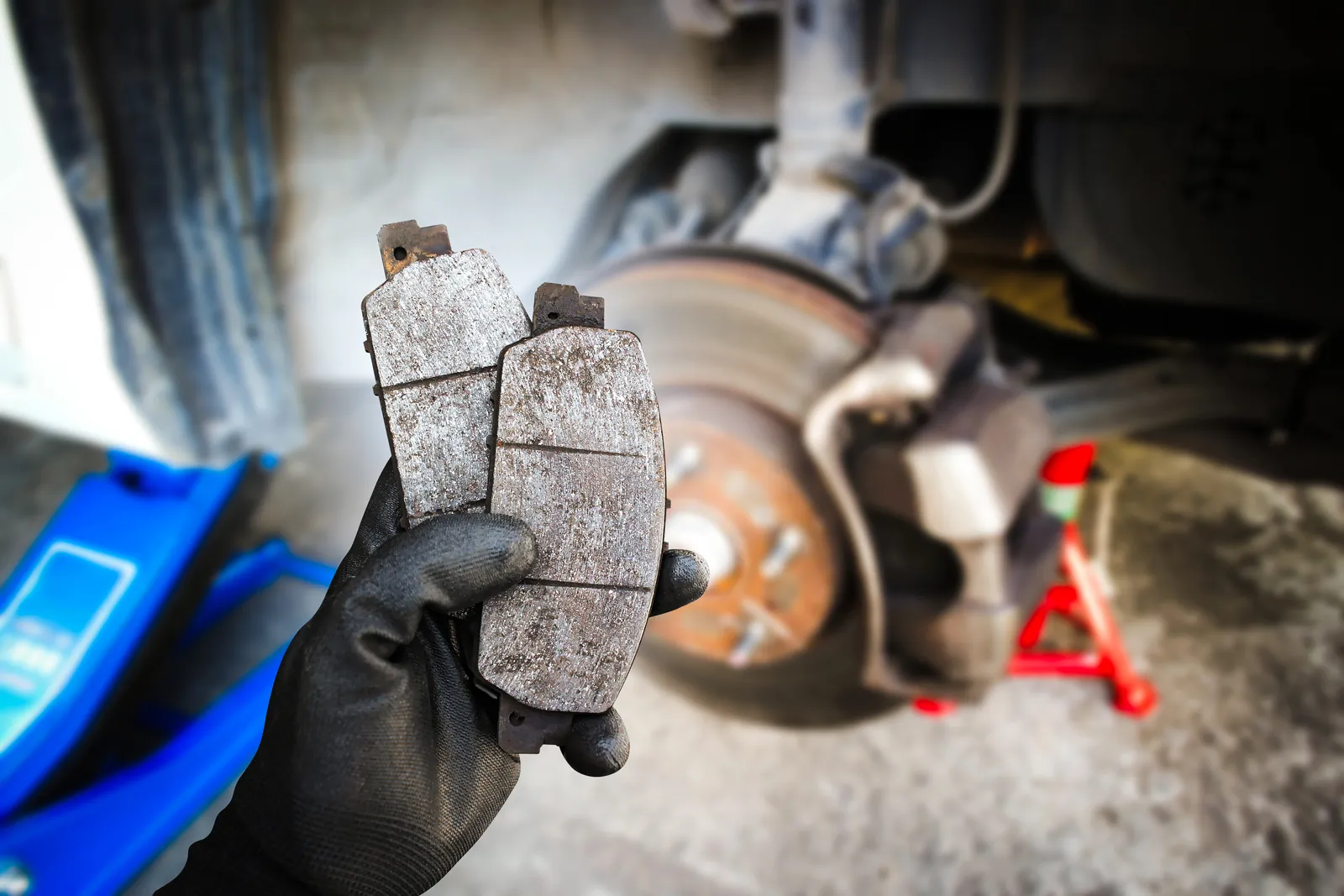
Brakes grinding when stopping usually points to pads that have worn through their friction material, so the steel plate behind it is scraping the rotor each time you press the pedal. It often follows a stretch of squealing. It means the brakes should be inspected soon, with as little driving as possible until then.
It is not the only possibility. A film of rust after the car has sat, a stone caught behind a rotor and the anti-lock system working during a hard stop can each be described as grinding. When the noise happens, and whether it goes away, is what separates them.
If the noise is there each time you slow down, Golden Star Mobile Mechanics can inspect the brakes where your vehicle is. Mobile brake repair is work we do on site, and the cause is confirmed before parts are replaced.
What Is Happening When Brakes Grind
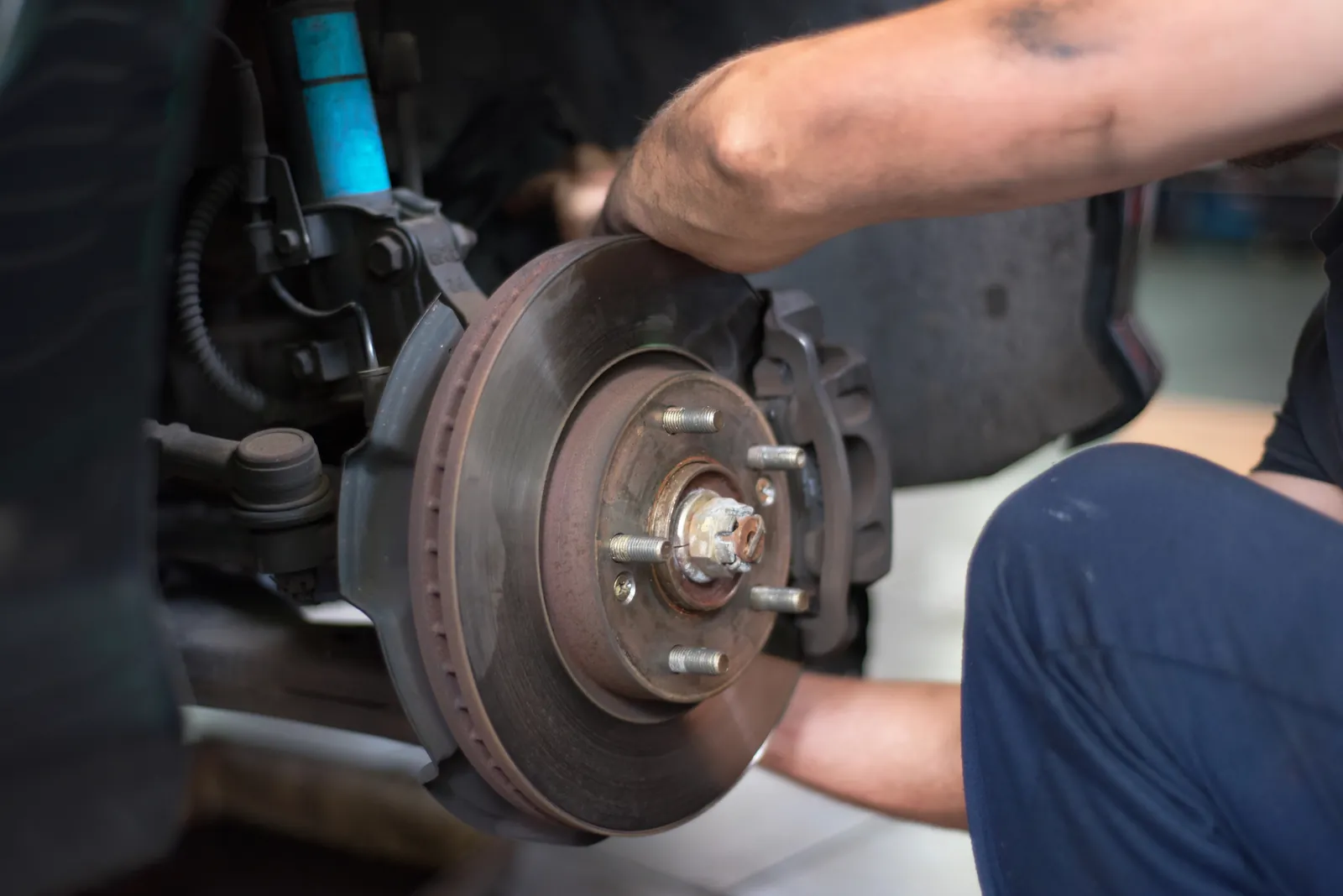
A disc brake squeezes a pair of pads against a spinning iron rotor. Each pad is a layer of friction material fixed to a steel backing plate. As the material wears down, many pads have a steel wear tab that rubs the rotor and squeals as a warning, and some cars use a sensor and a dash light instead.
If the pads stay in use past that point, the friction material runs out and the backing plate meets the rotor. Steel on iron slows the car poorly and cuts grooves into the rotor with each stop. A rotor that might have been reused may then need replacing, and with more wear the caliper can be damaged as well.
Other Things That Can Sound Like Grinding
- Surface rust. After rain, a wash or several days parked, a thin layer of rust forms on the rotors and the first stops sound rough. It clears with normal braking.
- A stone or road debris caught between the rotor and the thin shield behind it. This scrapes whether or not you are braking and may change when you reverse.
- A sticking caliper. One pad drags and wears out long before the others, and that wheel may run hot or smell.
- Worn rear brake shoes on a car with drum brakes.
- A worn wheel bearing. This is more of a growl that changes with speed and cornering than with the pedal.
- The anti-lock system. A buzzing, pulsing feel through the pedal during a hard stop or on a loose surface is the system working.
Sound alone does not settle which one it is. On many cars the pads cannot be judged properly without taking the wheels off.