
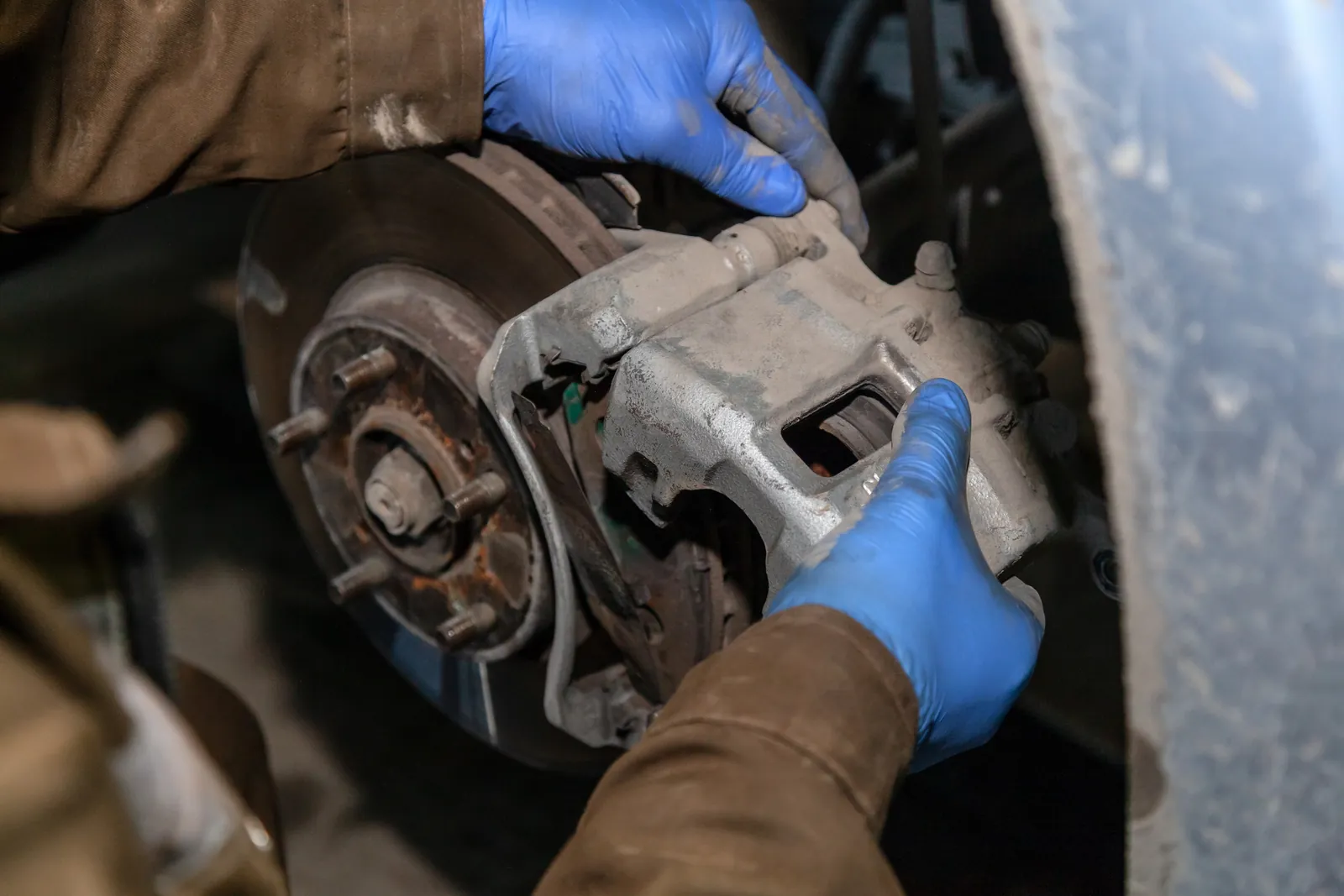
Brakes squeaking is a common complaint, and much of the time nothing is wrong. Pads and rotors work by friction, friction makes parts vibrate, and a squeak is that vibration at a pitch you can hear. What matters is the pattern: when it happens, how long it lasts and whether it is getting worse.
The squeak to act on is a steady, high-pitched squeal that turns up on most stops and does not fade as the brakes warm. On many cars that sound comes from the wear indicator, a small metal tab made to touch the rotor once the pad material is getting thin.
If that describes your car, the pads and rotors can be inspected where the vehicle is parked. Golden Star Mobile Mechanics performs mobile brake repair on site.
Squeaks That Are Usually Harmless
- First stops of the day. Overnight moisture, rain or a car wash leaves a thin film of rust on the rotors, and it wipes off within a few stops.
- Dust and grit. Dusty roads and windy days put fine grit between pad and rotor, and the noise comes and goes.
- The pad material. Harder pad compounds tend to be noisier, especially when cold or at walking pace.
- New pads or rotors. Fresh surfaces can make noise during the first drives while they wear in to each other.
What these share is that they pass, and the car stops just as it did before.
Squeaks That Mean the Brakes Need Attention
- The wear indicator. A thin, steady squeal on most stops. Depending on the design, it may sound while you roll and go quiet when you press the pedal.
- Glazed pads or rotors. Overheating can leave a hard, shiny surface that squeals and grips less well.
- Hardware. Clips and shims keep the pads from vibrating, and slide pins let the caliper move. Hardware that is worn, missing or dry can squeal.
- A caliper that sticks. It holds one pad against the rotor, so the squeal may carry on between stops and that wheel can run hotter than the rest.
- Rear drum brakes, where dust or worn shoes can squeak.
A wear indicator squeal does not mean the brakes have failed. It means the pads have a limited amount of material left, which is the time to have them measured.
None of these can be confirmed by ear. They are reasons to look, and the look usually means taking the wheels off.
