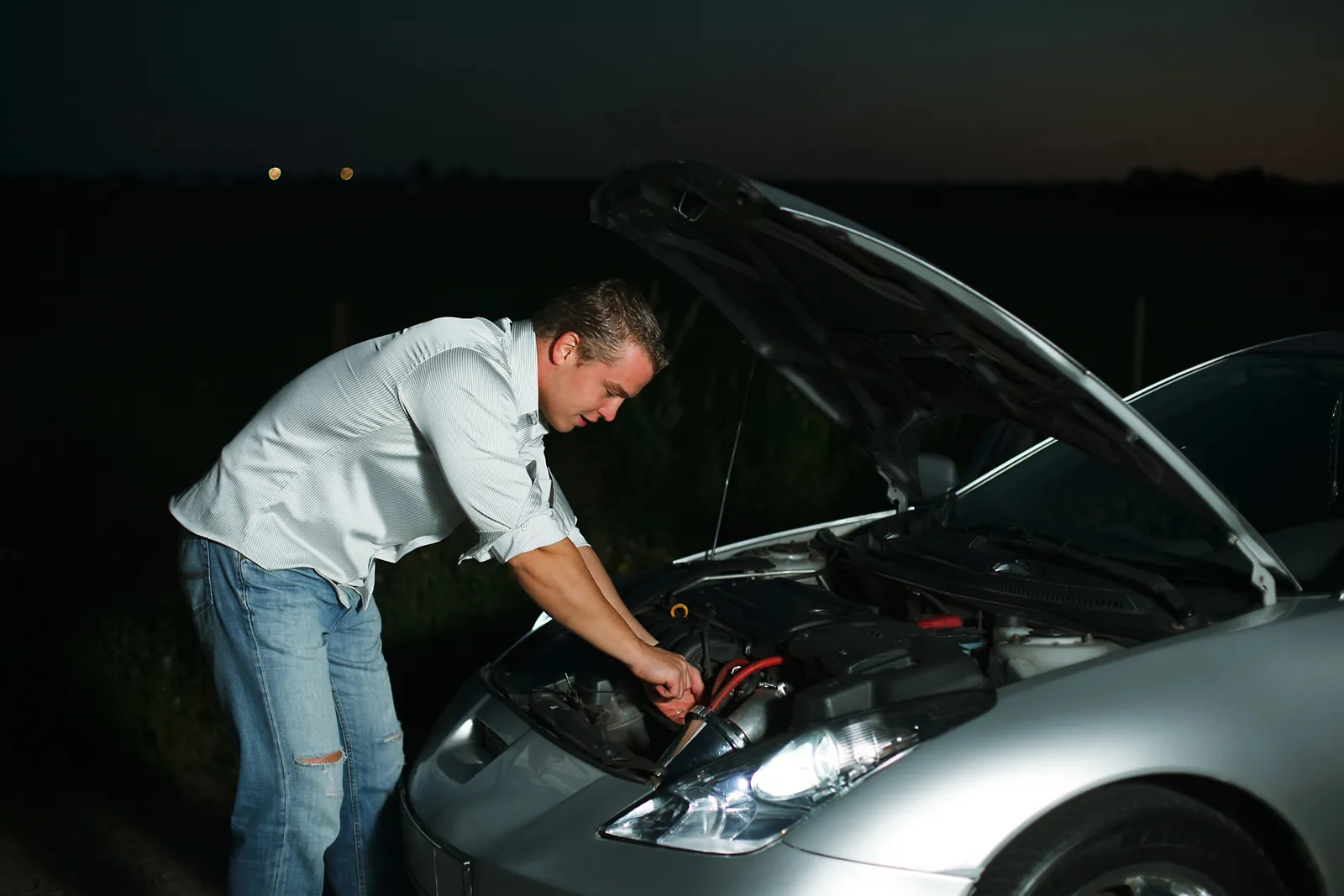
When a car clicks but won’t start, the click is a switch closing. It may be the starter solenoid under the hood or a small relay behind the dash. Either way, the car has received the request to start and something has kept the starter motor from turning the engine. Most often that is a battery too low to do the job, a poor connection between the battery and the starter, or a worn starter.
The sound does not prove which one it is. It does tell you where to look first.
If the car is stuck where it sits, Golden Star Mobile Mechanics comes to the vehicle for car won’t start diagnosis. We test the starting system first, so the fault is confirmed before any part is replaced.
What the Click Is Telling You
A string of clicks, one after another
A chattering run of clicks usually points to low power. The solenoid pulls in, the voltage sags under the load, the solenoid drops out, and the cycle repeats. A battery that is run down or worn out is the usual reason. Corroded or loose battery terminals can cause the same thing, because they choke off current even when the battery is healthy. Heat wears batteries down, so in the desert a battery only a few years old can be the weak point.
One solid click each time you turn the key
A single click or clunk, with dash lights that stay bright, suggests the solenoid is engaging but the starter motor is not spinning. Worn parts inside the starter are one possibility. A poor connection on the heavy cable to the starter is another. Less commonly, the engine itself is unable to turn.
A faint click from the dash and nothing else
A small click from the fuse box or behind the dash, with silence under the hood, suggests a relay is working but power is not reaching the starter. A starter relay, a fuse, the ignition switch, the switch that senses Park or a pressed clutch, and the anti-theft system are possibilities.
What You Can Check Safely
- Watch the dash lights or headlights while you turn the key. Lights that go very dim point toward the battery or its connections. Lights that stay bright point further down the line, toward the starter circuit.
- Look at the battery terminals. Crusty white or green buildup, or a clamp you can move by hand, is worth noting. The buildup is acidic, so keep it off your skin and away from your eyes.
- Make sure the shifter is in Park, or that the clutch pedal is pressed to the floor.
- Think back over the last few days. Slow cranking, an earlier jump start or a light left on points toward the battery.