A car maintenance schedule by mileage is a list of services tied to the odometer. The one that counts is in your owner’s manual or the maintenance booklet that came with the car, because it was written for your engine, your transmission and the fluids they use. A generic chart can only describe an average car, and intervals differ a great deal between vehicles.
For that reason this article gives no figures. It explains how to read the schedule you already have and which lines on it carry the most weight.
When scheduled work comes due, Golden Star Mobile Mechanics performs mobile car maintenance where your vehicle is. That covers oil changes, tune-ups, belt and hose work, and fluid and filter service.
Mileage Is Only Part of the Schedule
Most schedules give each service as a distance and a length of time, whichever comes first. Fluids age whether the car moves or not. Brake fluid takes up moisture from the air, and the corrosion protection in coolant is used up over the years. A car that is driven little can be due by the calendar long before the odometer says so.
Conditions count as much. Manuals carry a separate, shorter set of intervals for severe service, and the conditions that trigger it are ordinary ones: short trips, stop-and-go traffic, long idling, dust, high heat and heavy loads. Short trips leave fuel and moisture in the oil, dust loads the filters, and heat ages oil and rubber sooner. In a hot, dusty climate that guidance often applies. Many newer cars also track their own use and show a reminder when a service is due, and the manual explains what each reminder covers.
The Services That Protect the Expensive Parts
- Engine oil and filter. Clean oil at the correct level is the foundation of engine life.
- Timing belt, on engines that have one. Many engines use a chain instead. Where a belt is fitted, the manual gives a replacement point, and on many engines a belt that breaks lets the valves and pistons collide.
- Coolant. It carries heat away and protects the metal inside the cooling system. The manual gives the type and the interval.
- Transmission fluid. Schedules differ widely here, and some list a fluid service only under severe conditions.
- Brake fluid. Some manufacturers set a change by time, because moisture in the fluid lowers its boiling point and corrodes brake parts.
- Spark plugs. Worn plugs bring misfires, harder starting and wasted fuel.
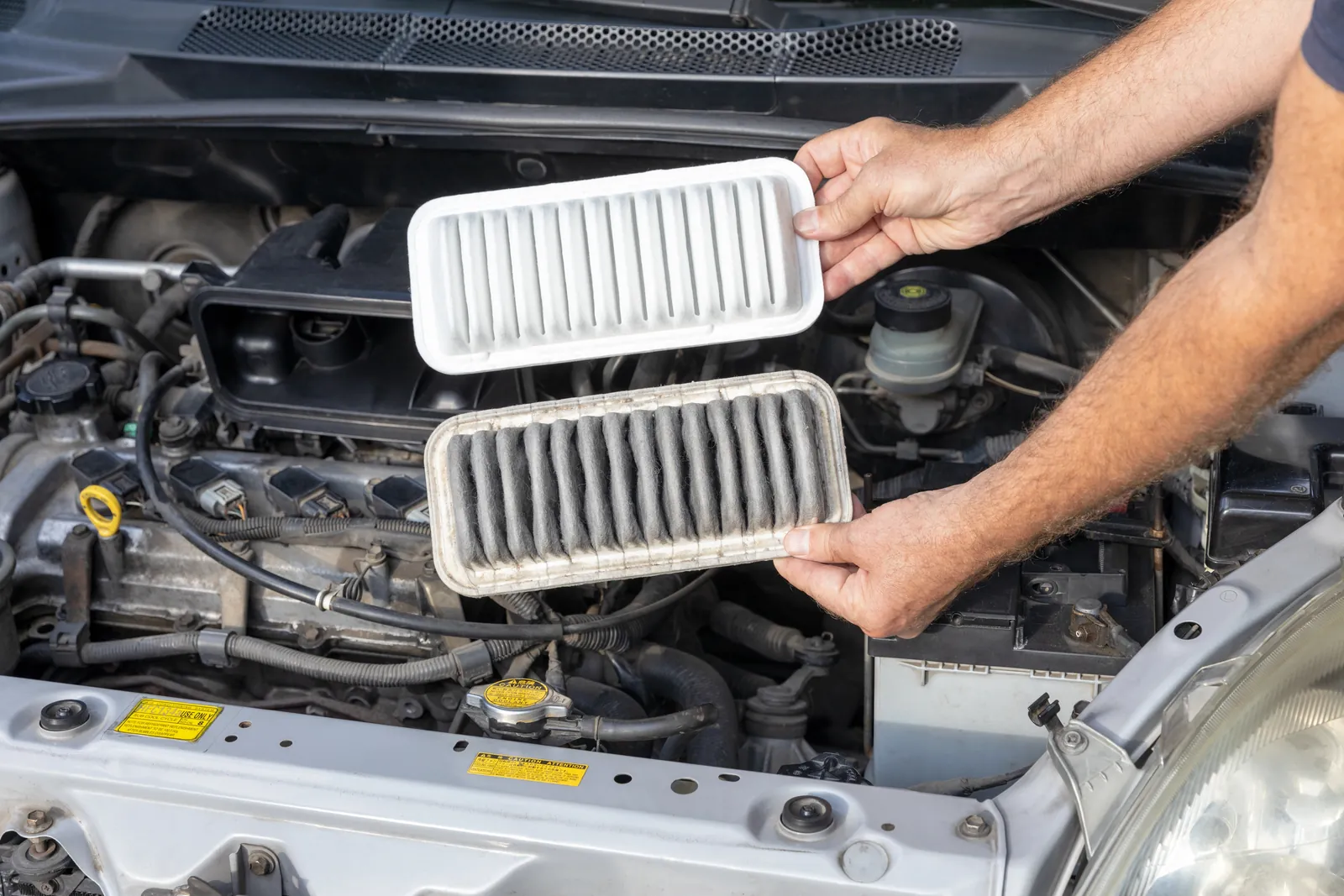
- Engine air filter. It keeps dust out of the engine, and in dusty air it fills up ahead of schedule.