Opens in a new tab

Why Is My Car Shaking?

Most shaking comes from the tires and wheels. The rest comes from the brakes, the axles and suspension, or the engine, and when the shake shows up is the strongest clue to which.

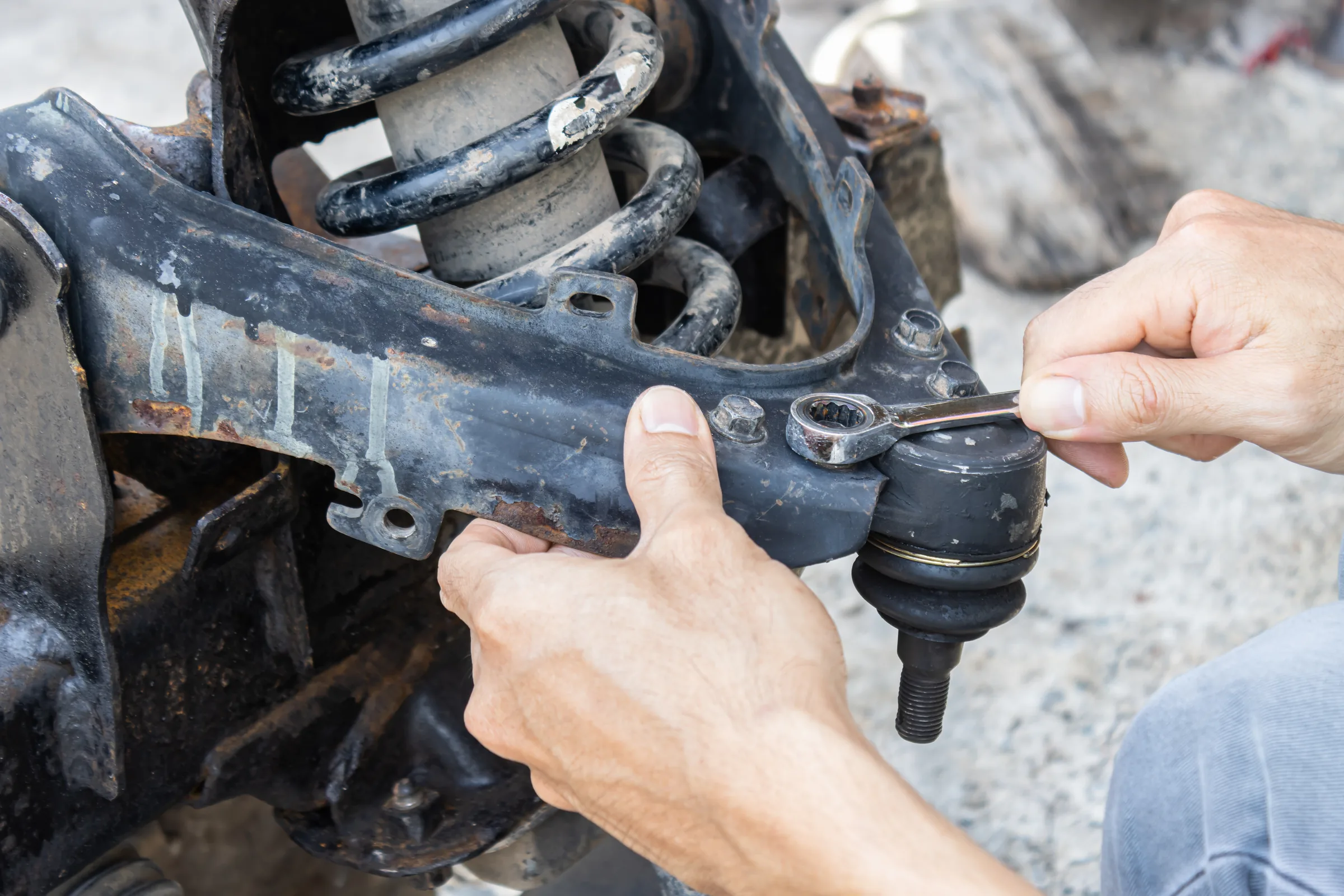
Hands tighten a ball joint nut on an upper control arm beside the coil spring

A car shaking when driving is usually telling you that something is out of balance, worn or loose. The useful question is when it happens: at a certain speed, when you brake, when you accelerate, or while the car sits still with the engine running. Each pattern points toward a different part of the car.

A pattern is a place to start. Several faults can produce the same shake, and more than one can be present at once.

If the shake has you unsure about driving the car, Golden Star Mobile Mechanics comes to where your vehicle is. With mobile diagnostics, the cause is tested and confirmed before parts are replaced.

A Shake That Comes With Speed

A vibration that appears as the car reaches highway speed, and often fades above or below a certain band, most often comes from a tire or wheel.

  • A wheel that is out of balance, sometimes because a balance weight has come off.
  • A tire with a bulge, a flat spot, a separated belt inside it or uneven wear.
  • A wheel bent by a pothole or a curb.
  • Mud or debris packed inside a wheel.

Where you feel it helps. A shake in the steering wheel usually points toward the front of the car, and one felt through the seat or floor toward the rear. Worn steering and suspension joints or a worn wheel bearing can let a small vibration grow into a larger one.

If the shake began soon after a wheel was taken off, stop and have the wheel nuts checked. A loose wheel wobbles more as it loosens further.

A Shake Under Braking

A steering wheel that shudders, or a brake pedal that pulses under your foot, as you slow from speed usually traces to the brake rotors. Uneven rotor thickness, or pad material laid unevenly on the rotor face, makes the pads grab and release with each turn of the wheel. A caliper that sticks can add a pull to one side, a hot smell near one wheel and a vibration that stays after you release the pedal.

The pulsing of anti-lock brakes during a hard stop on a loose or wet surface is normal and is a separate thing.
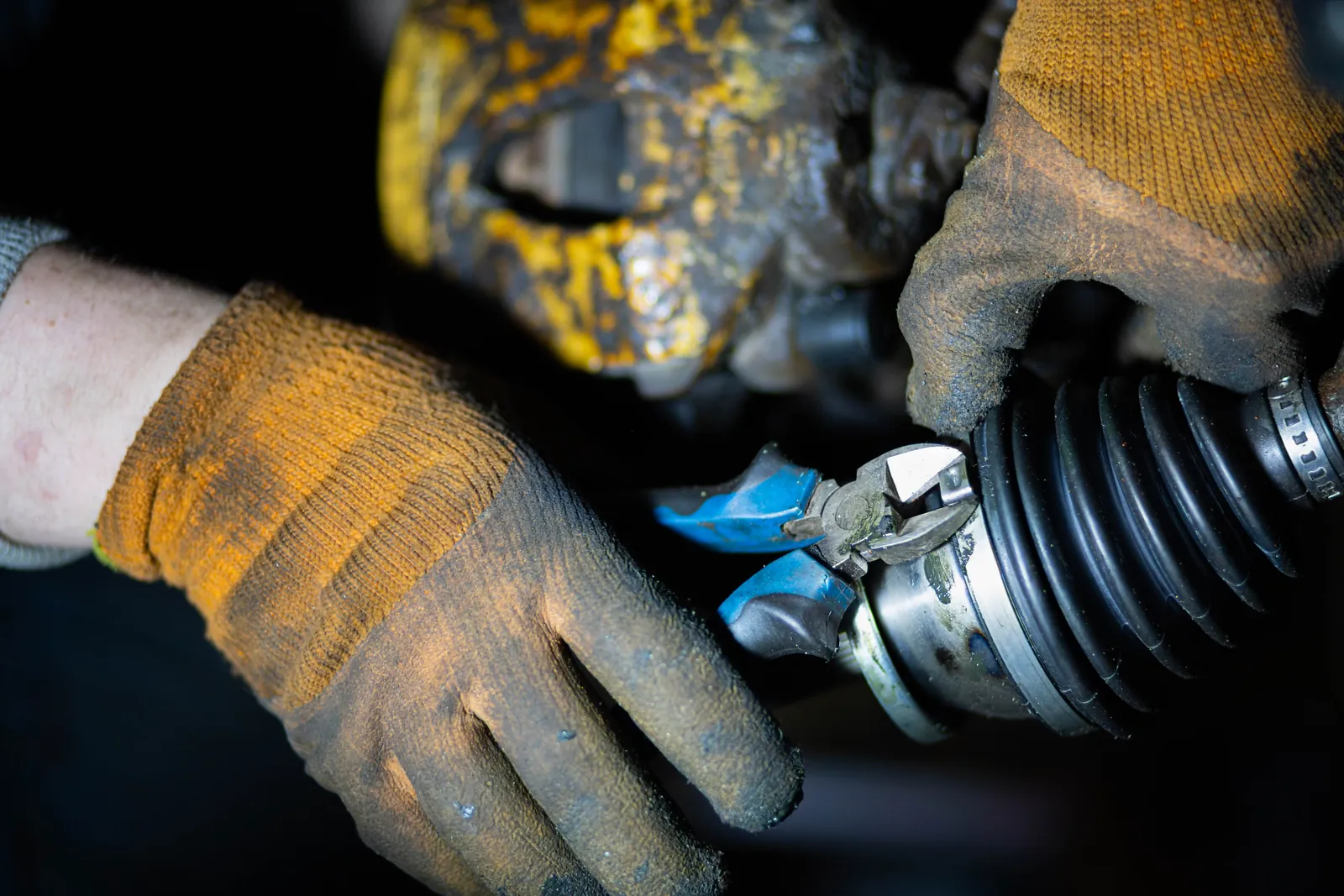
Gloved hands tightening the clamp on a new CV joint boot with pliers

A Shudder as You Accelerate

A shudder that appears as you speed up and eases when you lift off can come from a worn inner joint on a drive axle. On vehicles that drive the rear wheels, the driveshaft and its joints are a possibility. Worn engine or transmission mounts let the engine move more than it should under load, and an engine that misfires when worked hard can feel like a shake through the whole car.

A Rough Idle at a Stop

If the car trembles while stopped in gear and smooths out as you drive away, look to the engine. A misfire from a worn spark plug, a failing coil, a vacuum leak or a fuel fault makes the idle rough. So does a collapsed engine mount, which passes normal engine vibration into the body. A check engine light is often on with a misfire.

If that light is flashing, the misfire is bad enough to harm the catalytic converter. Drive gently, keep the trip short and have it checked.

When to Stop Driving

Slow down and stop somewhere safe if:

  • The shake starts suddenly or grows worse over a short distance.
  • The steering feels loose, or the car wanders or pulls hard.
  • You can see a bulge or damage on a tire.
  • There is a burning smell or smoke from a wheel.

A mild vibration that has stayed the same for weeks is less pressing, though tires and other parts wear unevenly while it continues. Before you ask for help, note the speed range where it starts, where you feel it and whether braking or accelerating changes it.

If the pattern leaves you unsure, Golden Star can diagnose the shake where the car is parked. Brake repair, suspension and steering repair, CV axle replacement and mobile tire service are among the services we perform. If the repair for a shake cannot safely be completed on site, we will say so, and the job may need a shop.

Have the Shake Diagnosed

Tell us what you drive, when the shake appears and where you feel it. We review what you tell us about the shake and contact you to confirm fit and timing. Call or text, or send a diagnostics request.