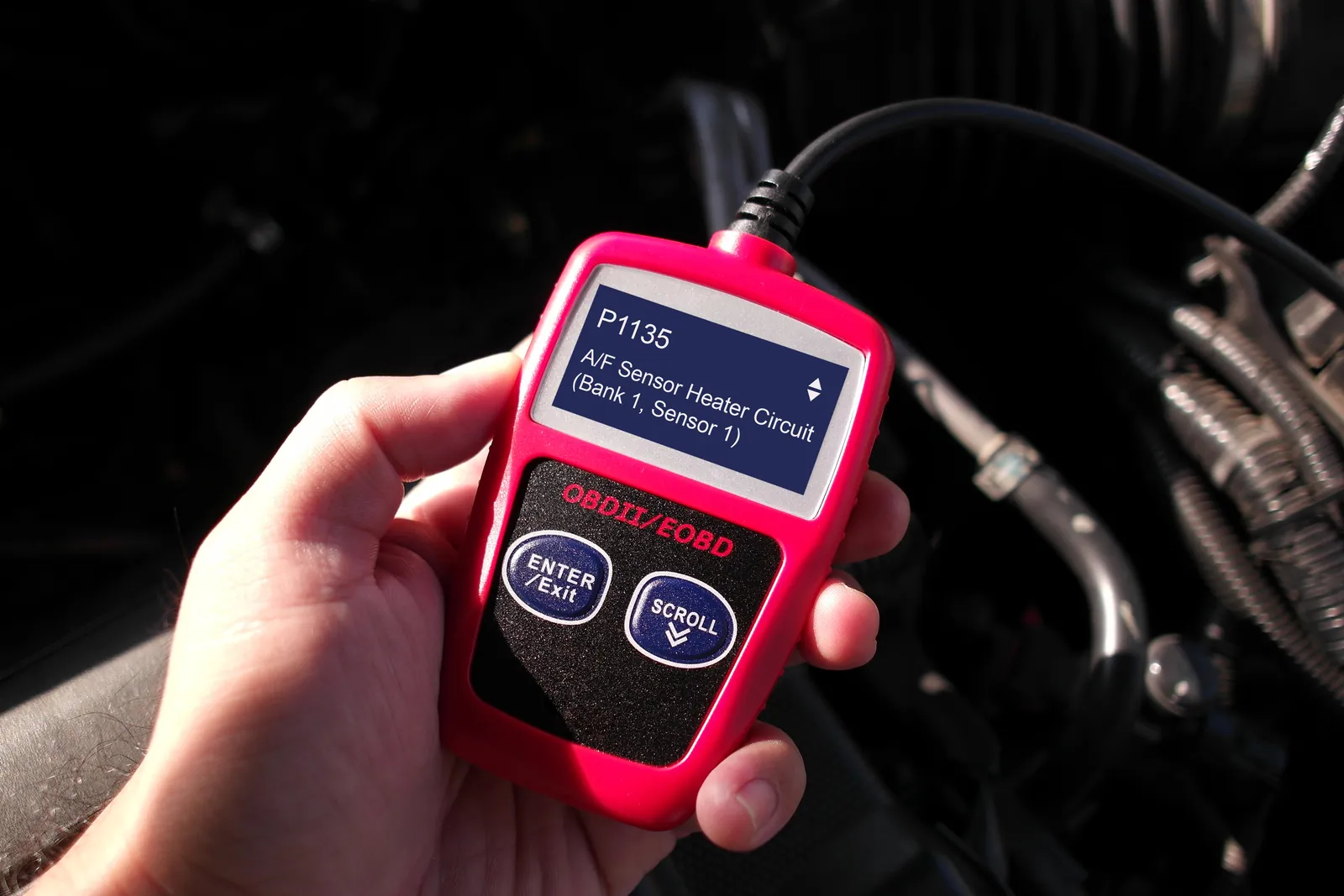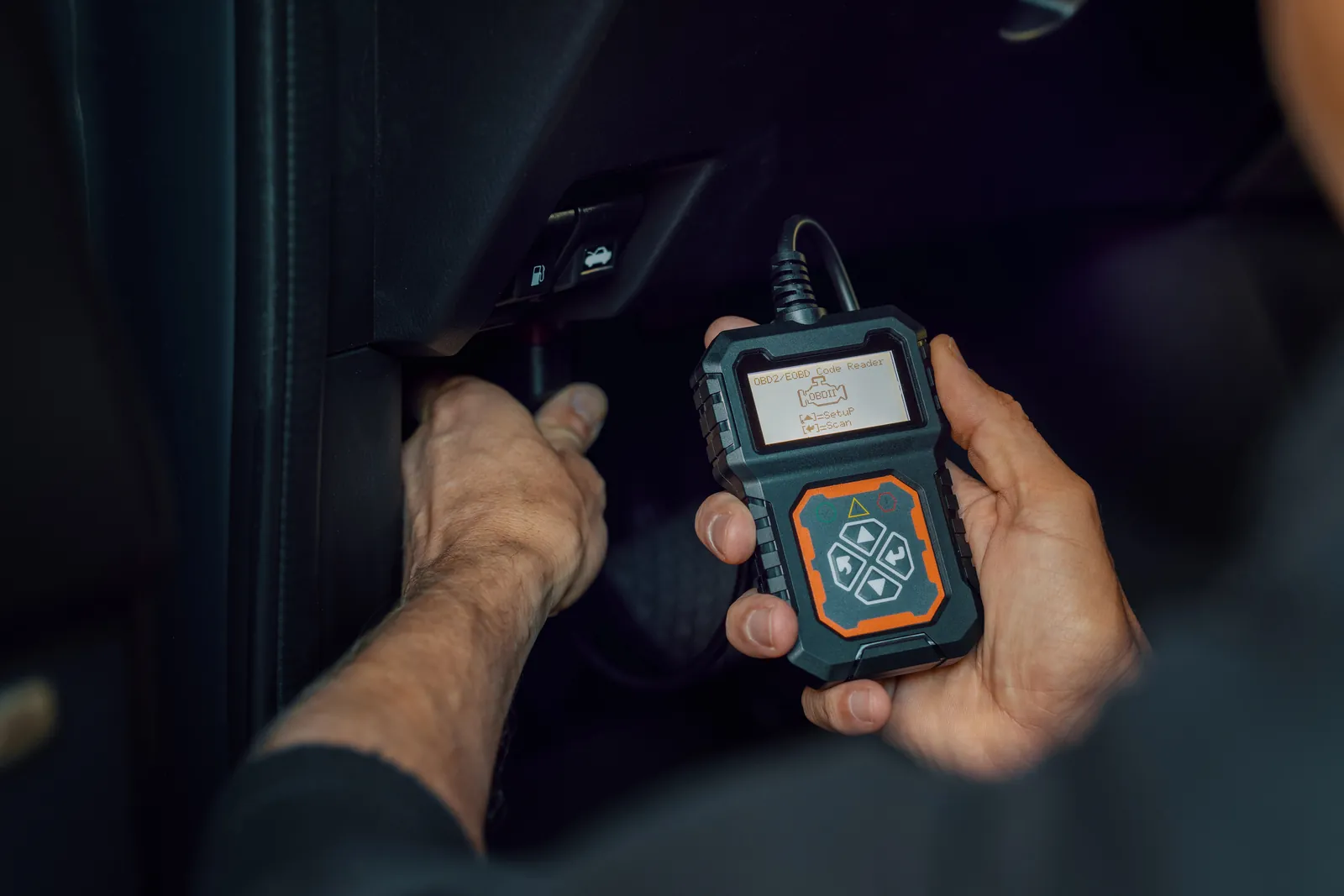
If the check engine light is on and a Nevada smog check is coming up, deal with the light first. A lit check engine light is the car telling you that its computer has stored a fault in the engine or in the emission controls. A smog check is an emissions test, so a stored fault is something to have diagnosed before the car is tested.
Which vehicles are tested, how the test is run and what counts as a pass are set by the state, and those requirements can change. The Nevada DMV is the official source for the current rules. Check there instead of relying on a summary, this article included.
The repair is where a mechanic comes in. Golden Star Mobile Mechanics comes to you to diagnose the fault behind the light and repair the cause, a service described on our failed smog check repair page. We do not perform the smog check itself.
What the Light Is Reporting
The engine computer watches the engine and the parts that control what leaves the tailpipe and the fuel tank. When a reading falls outside its expected range, or one of its own self-checks comes back wrong, it stores a trouble code and switches the light on.
The light says a fault exists. Which part is responsible, and how much it matters, are things it cannot tell you. A steady light usually leaves you time to arrange a diagnosis. A flashing light usually means a misfire that can damage the catalytic converter, and the car should be driven as little as possible until it has been checked.
Common Faults Behind the Light
Many of the faults that set the light involve the emission controls. These are the usual suspects, and none of them can be confirmed from the code alone:
- A gas cap that is loose or has a worn seal, or a leak elsewhere in the system that holds fuel vapor.
- An oxygen sensor that has slowed with age, or one that is correctly reporting a mixture problem.
- A misfire, which a worn spark plug, a weak ignition coil, a leaking injector or a vacuum leak can each cause.
- A catalytic converter that is no longer working well enough, or a sensor or exhaust leak that makes it look that way.
- An air and fuel mixture that is too lean or too rich.
- A thermostat that keeps the engine from reaching its normal temperature.
A single code can come from more than one fault, which is why the part named on a code printout is a suggestion and not a finding.