A clicking noise when turning is one of the more recognizable sounds a car makes. The classic version is a steady click or pop that starts as you pull away with the steering wheel turned, comes closer together as the car gains speed and goes quiet when you straighten out. A worn outer CV joint, on one of the axles that drive the front wheels, is a common source of that sound.
It is not the only one. Strut mounts, ball joints, tie rod ends, a loose wheel cover and even loose wheel nuts can click, pop or clunk in a turn, and each calls for a different repair. The pattern of the noise narrows the list, and an inspection settles it.
When the joint does turn out to be worn, Golden Star Mobile Mechanics performs CV axle replacement where your vehicle is. We inspect and test first to confirm the cause, so an axle is replaced only when it is the part at fault.
What a CV Joint Does
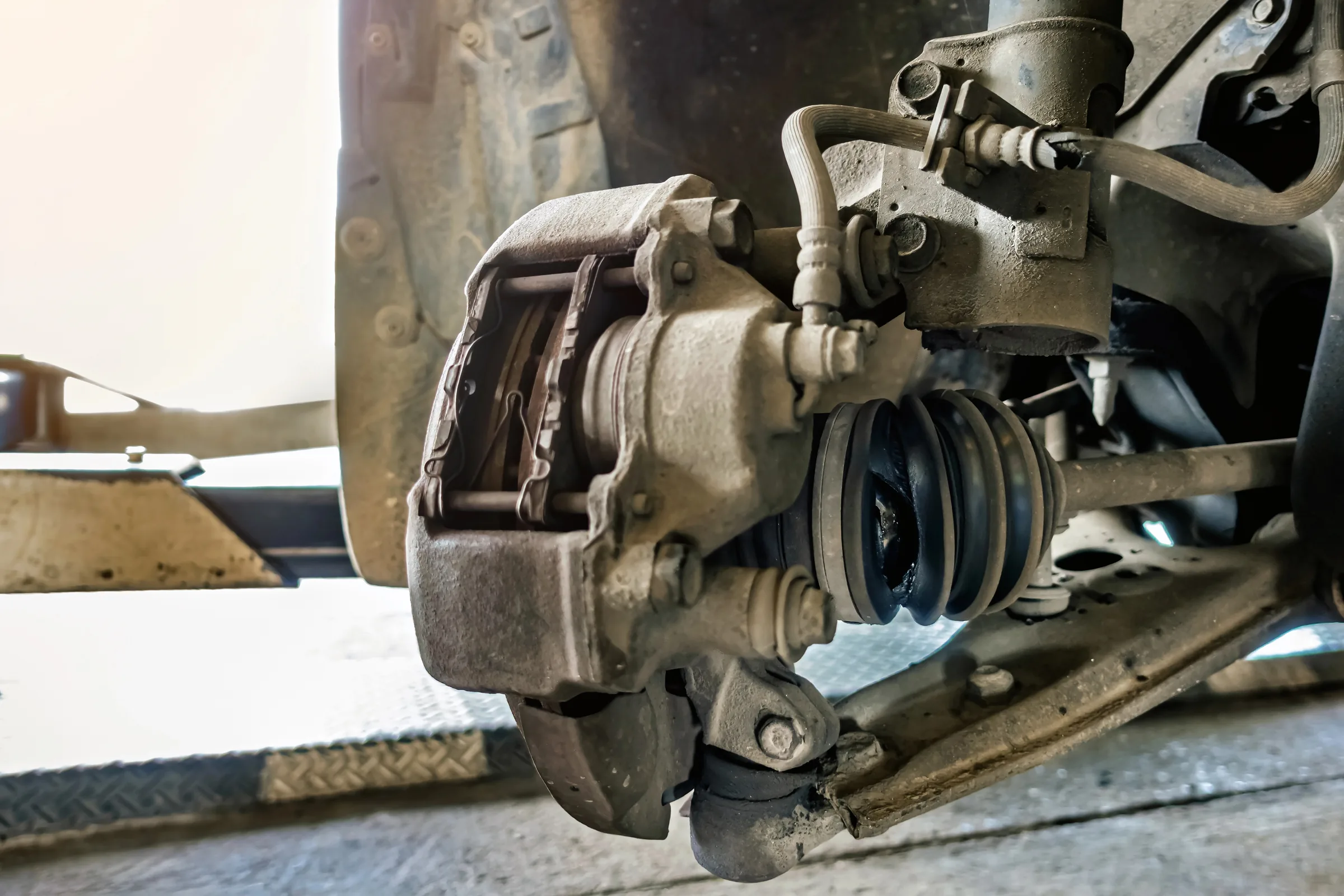
On a front-wheel-drive car, and on many vehicles that drive four wheels, each driven wheel is turned by an axle shaft with a constant velocity joint, or CV joint, at each end. The joints let the shaft keep delivering power while the wheel steers and rides up and down with the suspension. The outer joint, next to the wheel, works at the sharpest angles.
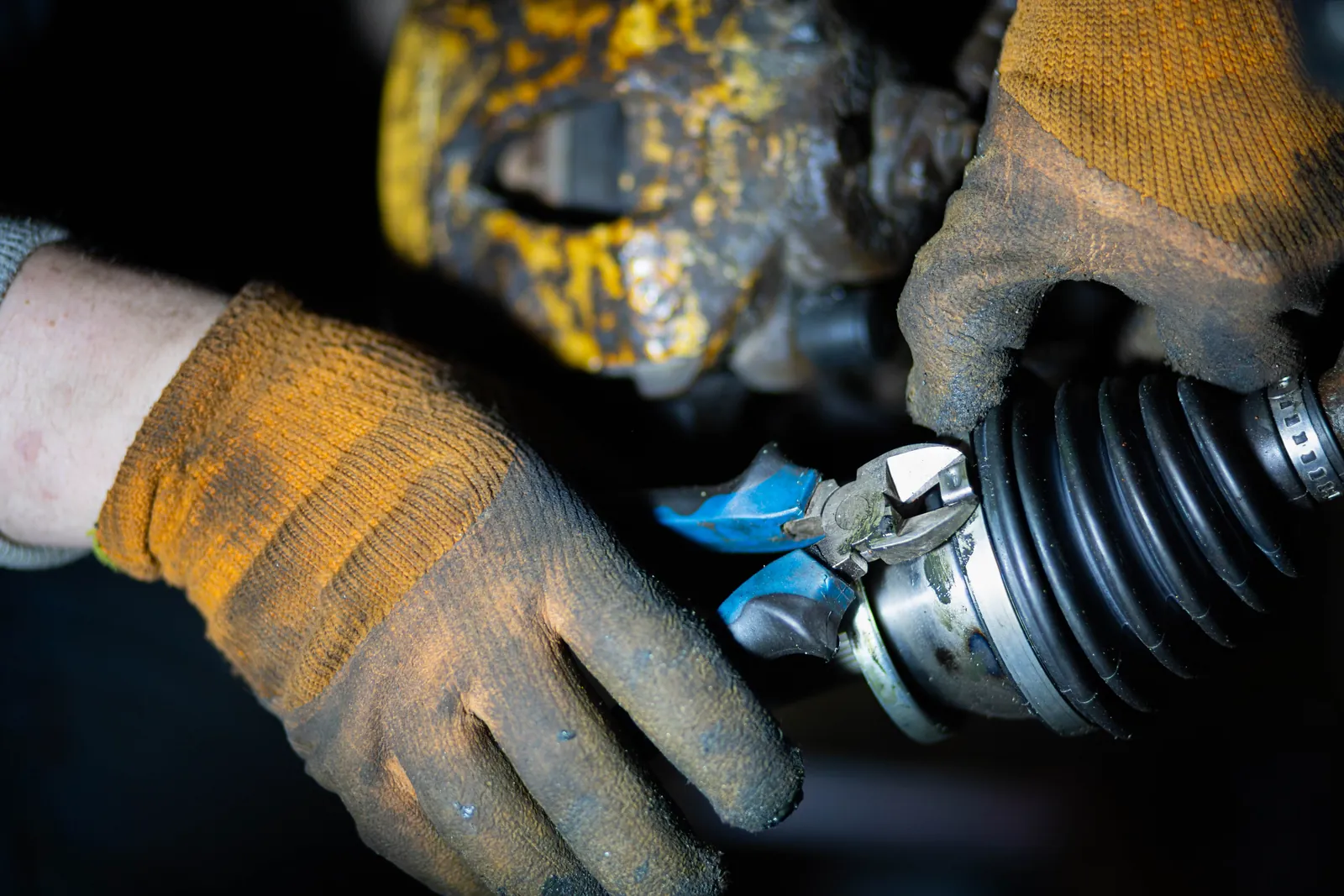
Each joint is packed with grease and sealed inside a flexible rubber boot. The boot is usually what gives out first. Once it cracks or tears, the grease is flung out and grit and water get in, and the joint starts to wear.
Signs That Point Toward a CV Joint
- The click is loudest in a tight turn under power, such as pulling out of a parking spot with the wheel near full lock.
- Dark grease is splattered on the inside of a wheel or on the parts behind it, or a rubber boot on the axle looks split.
- The car shudders or vibrates while accelerating, which is more often linked to an inner joint than an outer one.
A click in left turns is often blamed on the right-hand joint, and the reverse. That rule of thumb is too loose to choose a part by.
Other Causes of Noise in a Turn
- Strut mounts. A pop, creak or twang as the wheel is steered, sometimes with the car standing still.
- Ball joints and tie rod ends. A clunk or knock in turns and over bumps, sometimes with steering that feels loose or wanders.
- A wheel bearing. More of a hum or growl that changes as the car leans into a curve than a click.
- A loose wheel cover, a stone in the tread or a bent brake dust shield. A light tick that follows wheel speed and is usually there in a straight line too.
- Loose wheel nuts. A click or clunk from one wheel, sometimes after recent tire work. Stop and have them checked before driving further.
Can You Keep Driving?
A CV joint that has begun to click usually gets worse gradually, so there is often time to plan the repair. The wear does not stop, though. A joint that fails outright can leave the car unable to move under its own power, and a broken axle can damage the parts around it.
Until the car is checked, take tight turns gently and avoid hard acceleration with the wheel turned. Stop driving and have it looked at if the click becomes a heavy clunk, a vibration starts, or the steering feels loose or different. Those can mean a part that holds the wheel in position is involved.
How the Source Is Confirmed
The check starts with the pattern: which direction, what speed, under power or coasting. Slow, tight circles in each direction usually bring out a CV joint click. With the wheels off the ground, the boots are examined for splits and thrown grease, each axle is flexed by hand to feel for play, and the nearby steering and suspension joints are checked for looseness.
On many cars the usual repair for a worn outer joint is a complete axle shaft, which comes with both joints and new boots. A boot that split recently, before the joint began to click, can sometimes be replaced by itself. Which approach suits depends on the vehicle and on the condition of the joint.
If the inspection points to the axle, Golden Star can replace the CV axle where the car is parked. Suspension and steering repair is also work we perform, and mobile diagnostics is the place to start when a noise is hard to pin down.