How long do brake pads last? On many cars a set covers tens of thousands of miles, and the spread around that is wide. A car that spends its days in stop-and-go traffic can use up its pads in a fraction of the distance a highway commuter gets from the same set. Mileage is a rough guide. The thickness of the friction material that remains is the real answer.
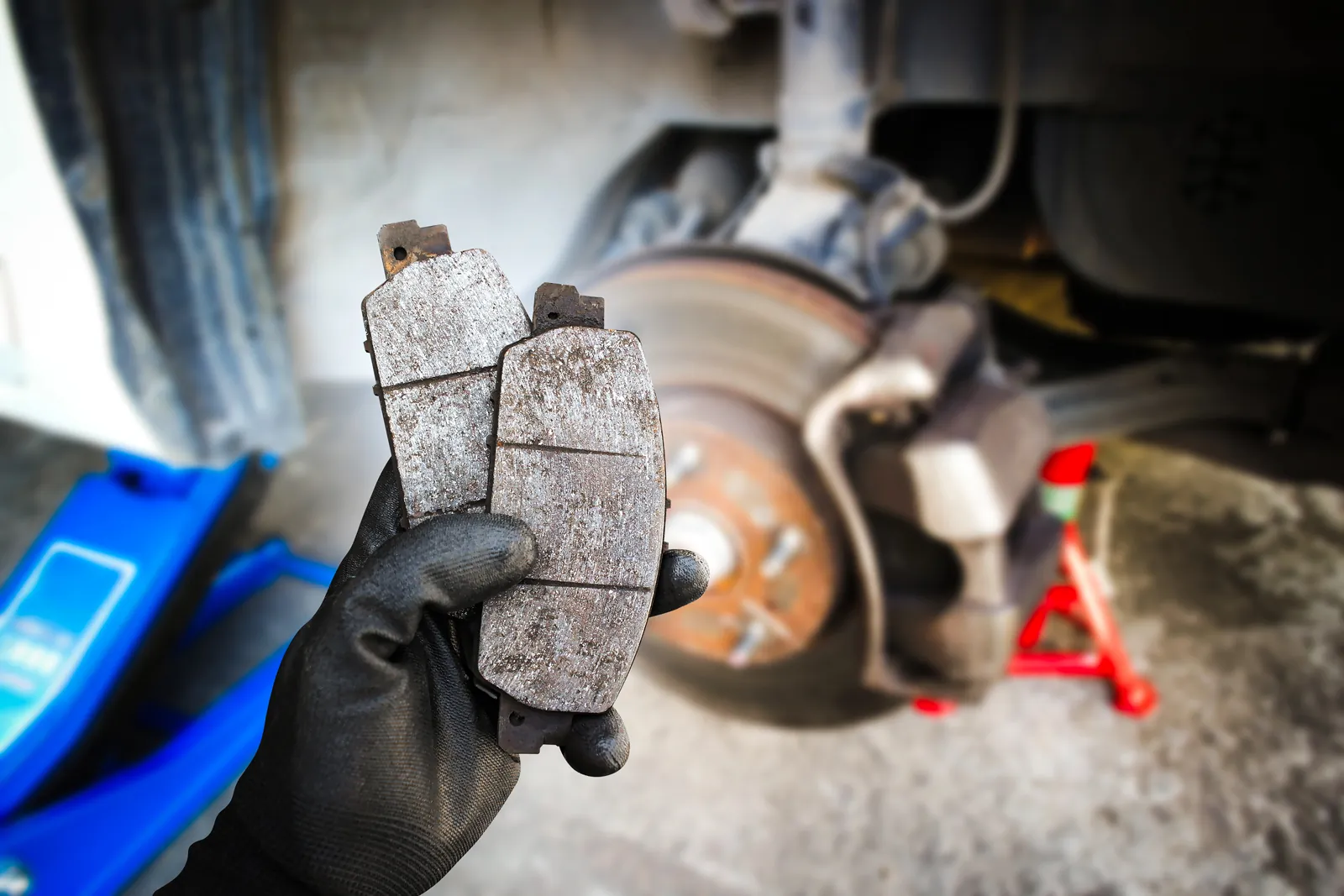
A brake pad is a steel backing plate with a layer of friction material attached to it. Each time you brake, the caliper presses that material against the spinning rotor, and a little of it wears away. Pads are made to be used up, in the same way tires are.
When the signs below suggest yours are due, brake repair is a service Golden Star Mobile Mechanics performs where your vehicle is.
What Decides How Long Pads Last
- Where you drive. Stop-and-go traffic works the brakes far more than steady highway miles.
- How you brake. Late, hard stops make more heat and take off more material than slowing early.
- Weight. A heavy vehicle, a full load or a trailer gives the brakes more to do.
- Hills. Long downhill grades keep the brakes working and hot.
- Pad material. Organic, semi-metallic and ceramic pads trade wear life, noise, dust and bite in different ways.
- The rest of the brake. A caliper that sticks, or slides that bind, can keep a pad dragging on the rotor and wear it out early.
Hybrid and electric vehicles slow down partly by using the motor as a generator, so their pads do less work and often last longer. They still need checking, because brake parts that see little use can corrode or stick.
Front and Rear Pads Wear at Different Rates
Braking shifts the car’s weight forward, so the front brakes do most of the stopping, and on many vehicles the front pads wear out first. That is a tendency and not a rule. Some vehicles use the rear brakes for stability and traction functions and go through rear pads sooner, which is one more reason to measure each axle.
Pads are replaced as a set across an axle, left and right together, so the car brakes evenly.
Signs the Pads Are Getting Thin
- A high-pitched squeal from a wheel. Many pads have a thin metal wear indicator that rubs the rotor and makes that noise once the friction material is nearly used up.
- A brake wear message or light on the dash, on vehicles with electronic wear sensors.
- Grinding or scraping. The friction material may be gone, with the steel backing plate cutting into the rotor.
- A brake fluid level that has dropped. As pads thin, more fluid sits in the calipers. A low level can also mean a leak.
- Friction material that looks thin through the wheel spokes. Only the outer pad shows that way, and the inner one can wear sooner.
A squeal is not proof of worn pads. Dust, moisture after rain or a car wash, and glazed pads squeal too. Grinding is the sign to act on. Stop driving the car and have it checked, since metal on metal lengthens stopping distance and damages the rotor.
How Pad Wear Is Checked
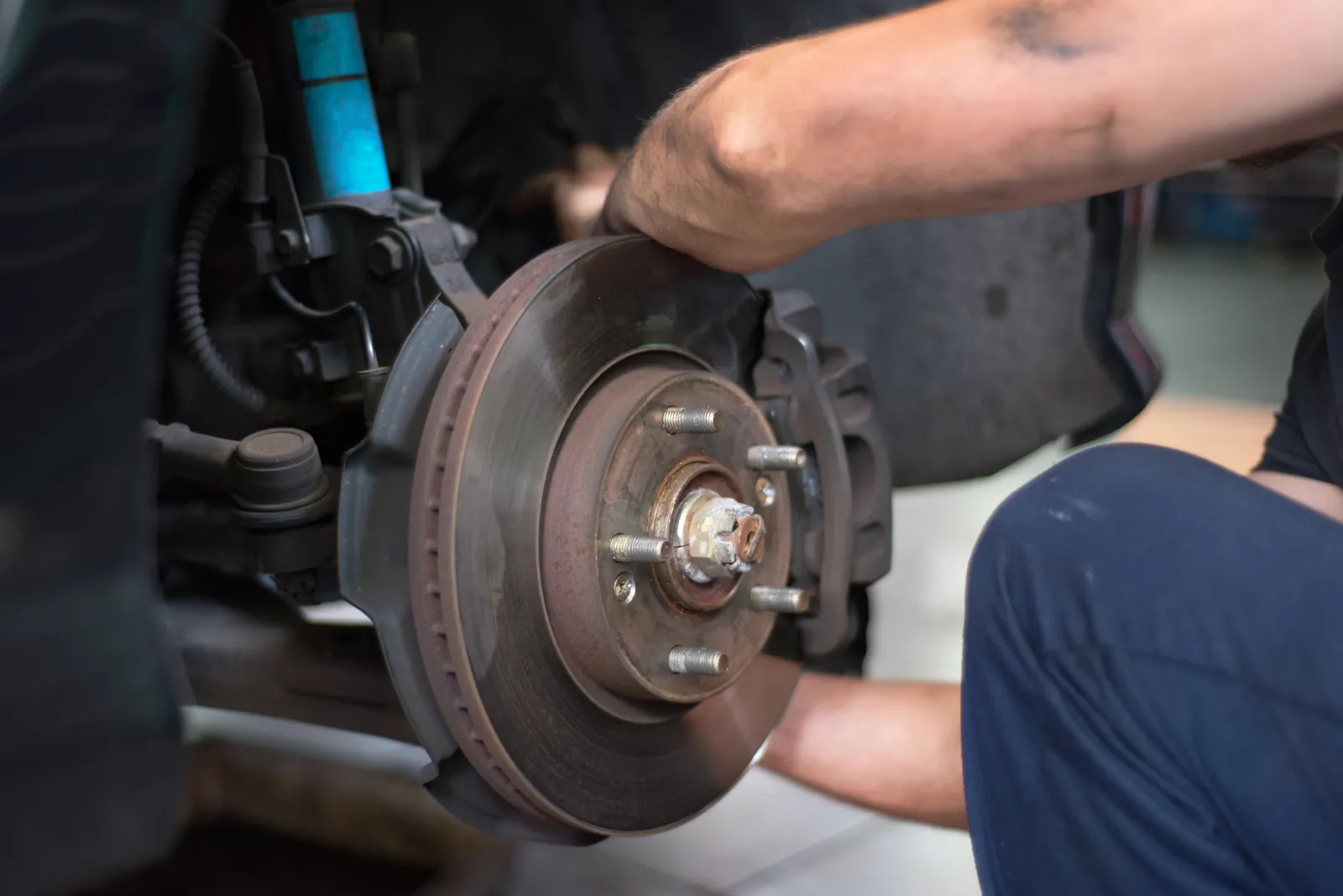
A proper check measures the friction material on the inner and outer pad at each wheel, which usually means taking the wheels off. The vehicle manufacturer publishes a minimum thickness, and pads are replaced before they reach it.
The rotors are measured while the wheels are off, because a rotor that is too thin or deeply scored does not give new pads a true surface. Uneven wear is a finding of its own. If the inner pad is far thinner than the outer one, or one side of the car has worn more than the other, a sticking caliper or seized slide may be involved, and new pads alone would wear the same way.
Many drivers have the pads checked when the tires are rotated, since the wheels are already off. The owner’s manual gives the inspection schedule.
Habits That Help Pads Last
- Look well ahead and lift off the accelerator early, so the car slows before you need the pedal.
- Leave room behind the car in front, which turns hard stops into gentle ones.
- On a long downhill grade, select a lower gear so the engine helps hold your speed. The owner’s manual explains how on your vehicle.
- Keep your foot off the brake pedal until you mean to slow down, so the pads are not left dragging.
When the pads are near their limit, Golden Star can handle the brake repair where the car is parked. The brakes are tested to confirm what is worn and why before parts are replaced.