Serpentine belt squealing is most often the sound of the belt slipping on a pulley. The belt may be worn, the tensioner that keeps it tight may be weak, fluid may have leaked onto it, or one of the parts it drives may be hard to turn. Which of those is behind it, and how much time is left, takes a closer look.
Some squealing belts carry on for a long while and others fail soon after the noise starts. Since the sound cannot tell you which kind yours is, the useful things to know are what the belt drives and which signs mean stop.
If the squeal keeps returning, Golden Star Mobile Mechanics performs belt and hose replacement where your vehicle is. The cause of the noise is tested and confirmed before parts are replaced.
Why a Belt Squeals
- Wear. The ribs lose material and sit lower in the pulley grooves, so the belt grips less. The rubber used on most current belts often does not crack as it wears, so a worn belt can look sound at a glance.
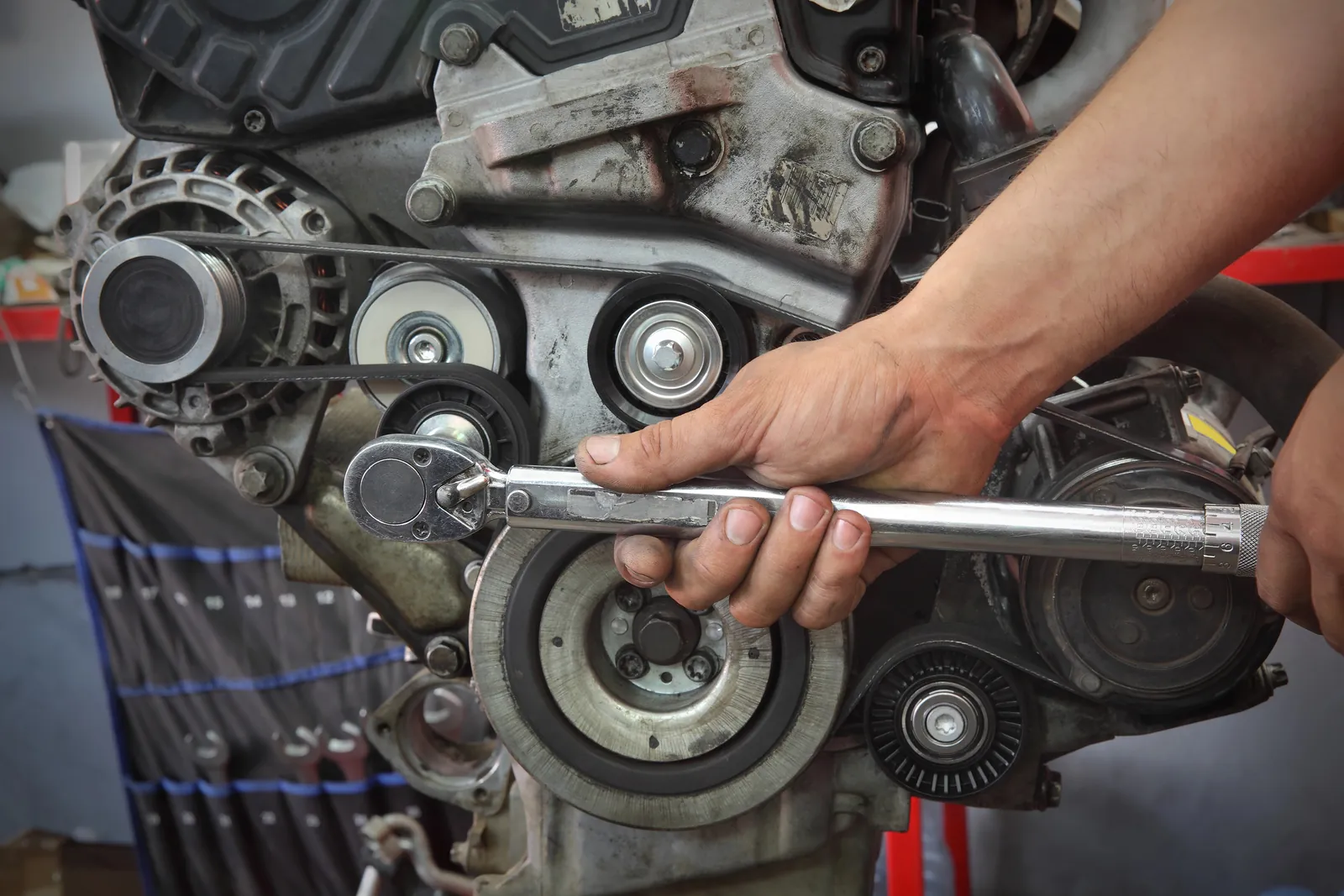
- Low tension. Most cars use a spring-loaded tensioner. When its spring weakens or its pivot wears, the belt slips under load.
- Contamination. Oil, coolant or power steering fluid on the belt makes it slip and softens the rubber. The leak has to be fixed too, or the next belt goes the same way.
- A pulley out of line. This often produces a rhythmic chirp more than a steady squeal.
- A part that resists turning. An air conditioning compressor, alternator or water pump that is seizing drags on the belt until it slips.
- Heat and age. Rubber hardens after years of heat, and a hard, glazed belt slips more readily.
Timing is a clue. A squeal at start-up that fades, or one that appears when the air conditioning comes on or the steering is turned to its stop, points toward slip under load. A grinding or rumbling noise is more likely a pulley bearing than the belt itself.
What the Belt Drives
On most cars a single ribbed belt runs the accessories bolted to the engine: the alternator, the air conditioning compressor, and on many engines the water pump and a power steering pump. If the belt breaks or comes off, those stop together. The battery warning light comes on and the car runs on the battery alone. Steering turns heavy on cars with a belt-driven pump. Where the belt drives the water pump, the engine starts to overheat soon after.
The timing belt, on engines that have one, is a separate part. It sits behind covers, cannot be seen from above and has its own replacement point in the manual.