Opens in a new tab

Coolant Leak or Just A/C Water? How to Tell

If the drip is clear, has no smell and shows up after the air conditioning has been running, it is most likely condensation, which is normal. Coolant is tinted, smells sweet and feels slightly slick, and a coolant leak needs attention.

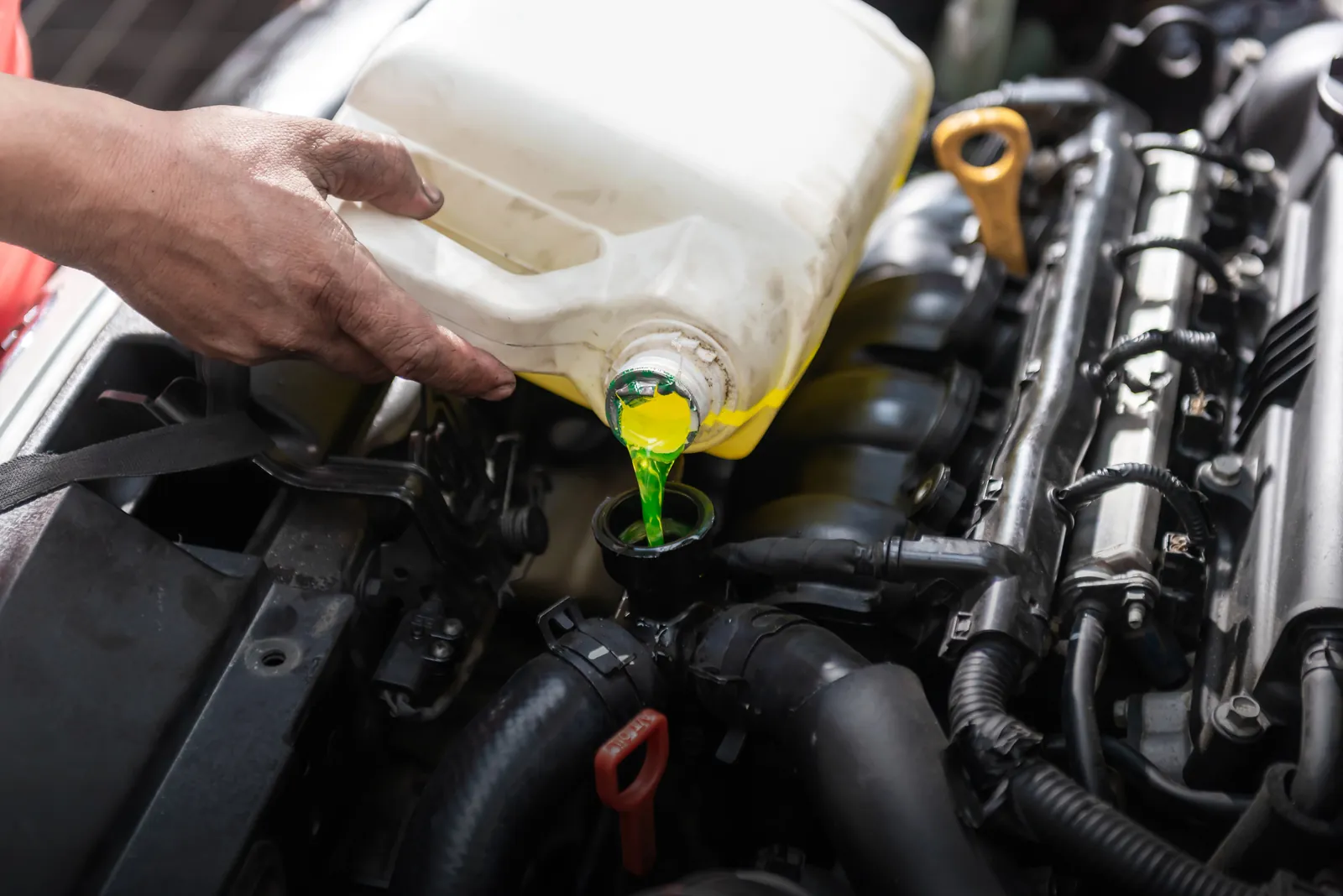
A mechanic's hand topping up a car's coolant from a jug

Water leaking under a car in warm weather is most often condensation from the air conditioning. As the A/C cools the cabin it wrings moisture from the air, and that water runs out through a small drain tube onto the ground, usually a little behind the front wheels and toward the passenger side. With the A/C working hard, it can leave a real puddle.

Coolant is a different matter. It is tinted green, orange, pink, yellow or blue depending on the type, it has a sweet smell, and it feels a little slippery between the fingers. The engine depends on it to control its temperature, so a coolant leak is worth tracking down.

Coolant is poisonous to people and animals, and its sweet taste attracts pets. Clean up what you find and wash your hands after touching it.

If the drip turns out to be more than water, Golden Star Mobile Mechanics comes to the car to find the source of a fluid leak.

A Simple Test With a Sheet of Paper

  1. Park on level ground after a drive and switch the engine off.
  2. Slide a sheet of white paper or clean cardboard under the drip.
  3. Once a few drops have landed, look at the color in daylight.
  4. Smell it, then rub a drop between your fingers.
  5. Note where under the car it landed.

What the Drip Tells You

Signs it is A/C water

  • It is clear, has no smell and feels like water.
  • It dries without leaving a stain or a residue.
  • It appears while the A/C or the defroster is running, or shortly after.
  • It lands under the passenger side of the dashboard area on most vehicles.

The defroster runs the A/C on many vehicles, so this drip can show up in cool weather too. Water from the tailpipe on a cold start is also condensation, and normal.

Signs it is coolant

  • It has a color and a sweet smell.
  • It feels slightly slick and leaves a chalky or crusty residue when it dries.
  • It tends to land near the front of the car, under the radiator, the hoses or the water pump.
  • It shows up even when the A/C has not been used.

Other fluids worth ruling out

Washer fluid is thin, often blue, and smells like glass cleaner. Engine oil is amber to black. Transmission and power steering fluid are often red. Brake fluid is clear to amber and slippery, and tends to appear near a wheel. A brake fluid leak is a safety problem, so the car should stay parked until it has been checked.
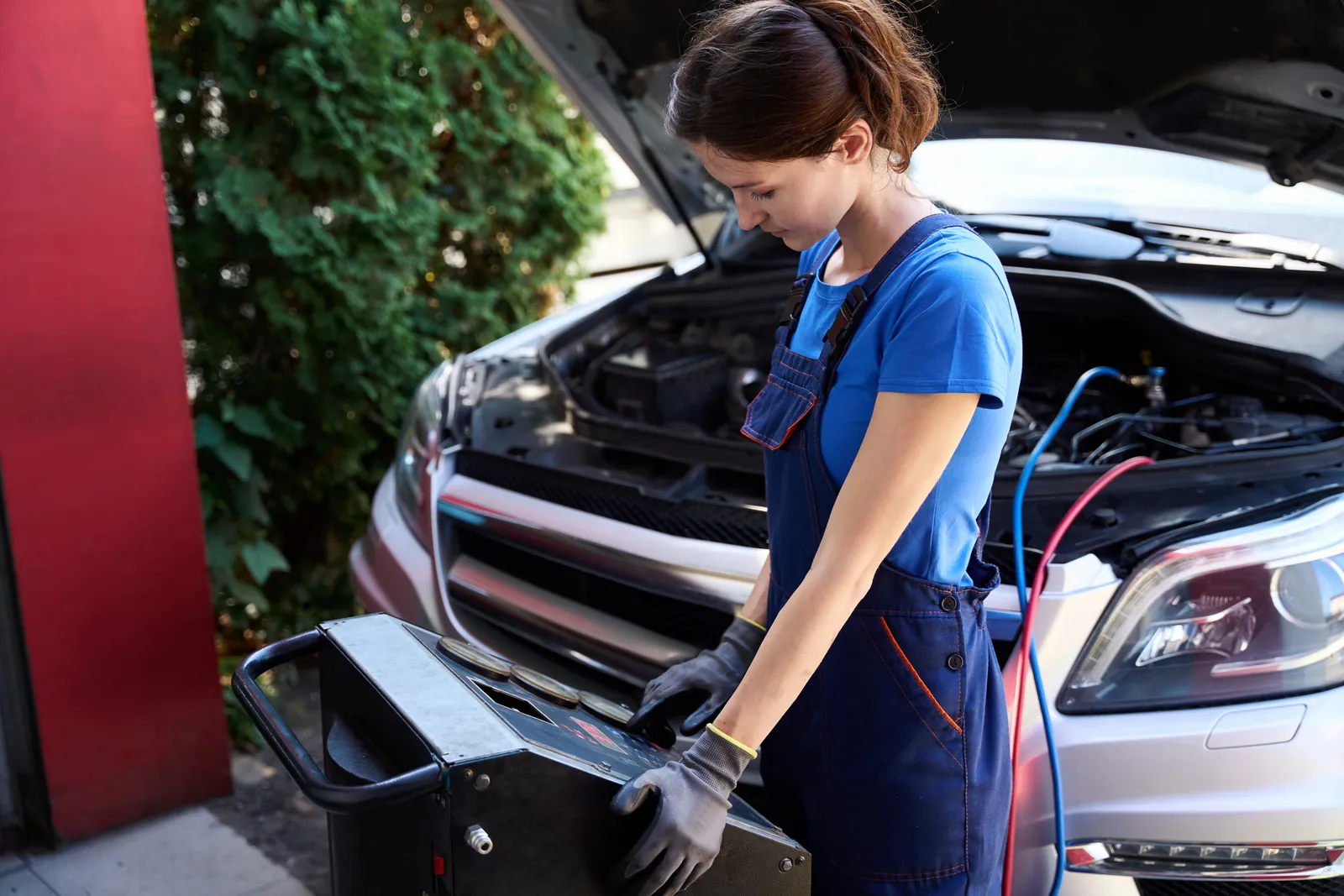
A mechanic in blue overalls working an air conditioning service machine hooked up to a car with its hood open

Checking the Coolant Level

The reservoir settles the question better than the puddle does. With the engine cold, find the translucent coolant tank under the hood and read the level against the lines marked on it. Note where it sits and look again after a few days of normal driving.

A level that holds steady alongside a clear drip points to condensation. A level that falls means coolant is going somewhere, even when no puddle appears, since it can evaporate off hot parts before it reaches the ground. Keep the radiator cap and the reservoir cap closed while the engine is hot.

Water or Coolant Inside the Car

A damp carpet on the passenger side raises the same question. If the A/C drain tube is blocked, plain water backs up and spills into the cabin. If the heater core is leaking, the liquid is coolant: the carpet feels slick, the cabin smells sweet and the windshield may fog with a greasy film. Rainwater getting past a seal is another possibility.

When a Leak Should Not Wait

  • The temperature gauge rises above its normal position or a temperature warning comes on. Stop as soon as it is safe to, and switch the engine off.
  • The coolant level keeps dropping.
  • You see steam from under the hood or smell coolant from the vents.
  • The fluid is near a wheel and the brake pedal feels different.

Small coolant leaks tend to grow, because the system runs hot and under pressure. Where the drip lands is a clue and not proof, since fluid runs along parts before it falls.

When you cannot tell what is leaking, Golden Star can check the leak where the car is parked. We test to confirm that the drip is more than water, and where it starts, before parts are replaced.

Find Out What Is Leaking

Describe the fluid’s color, the spot under the car where it falls and what the coolant level has done. We review what the paper test and the coolant level showed, then contact you to confirm fit and timing. The same details can come by call or text.